 Employee engagement has long been a concern to the U.S. workforce…it is a vital component of employee attraction and retention. Yet, with all the leadership programs targeted to “engage better with employees,” there hasn’t been a significant shift in relationships.
Add to this the alarm being sounded of various degrees of workplace violence happening…from unchecked incivilities and unprofessionalism leading to bullying to harassment to taunting (cyber or otherwise), leading to behavioral dysfunctions and, ultimately, violence from fist-fights to vengefulness to physical/mental abuse, to homicide. And the connection is…not knowing your people and lack of authentic engagement!
Culture is an outcome – an outcome of all the interactions of people – with each other, with supervision, with management, with the systems and processes they work with and in the carrying out of everyday “norms.” How interactions happen, how engagement takes place, and how deep it evolves are all key cogs in the workplace culture wheel – whether it is spinning for Safety, Quality, Morale, Involvement, Sustainability – the very same critical engagement processes need to happen. (Note: The Process Enneagram© is an example of a constructive dialog process used successfully for cultural-based improvement outcomes).
So creating a culture of engagement requires more than completing an annual employee survey and then leaving managers on their own, hoping they will learn something from the survey results that will change the way they manage.
Highly engaged organizations share common practices like these:
- They know creating a culture of engagement starts at the top.
- All levels of the organization are held accountable.
- They communicate openly and consistently.
- They hold their managers accountable – not just for their team’s measured engagement level, but also for how it relates to their team’s overall performance.
- They ensure that managers are engaging employees from the first minute of their first day at work. (Members of supervision possess emotional intelligence and are expected to be able to lead, interact with authenticity and caring with individuals and teams.)
- They have well-defined, integrated, and comprehensive development programs for leaders and managers (including how to hold the most difficult conversations. And how to lead constructive dialog processes).
- They focus on the development of individuals and teams with emphasis on constructive dialog around safety, quality, and the interactions of people to fulfill the business purpose. (This includes organizational assessments and vulnerability assessments for safety and security).
- Engagement is a fundamental consideration in their people strategy – and not an annual “check-the-box” activity.
- They hold regular, integrated, constructive dialog sessions to lift up the concerns that getting in the way of the team being the best that it can be and to support cooperation and collaboration.
- They care about positive co-worker relationships as well as the business outcomes. (Workplace rules, policies, procedures are clear – and well established/communicated/enforced for working within the work environment – for supporting the sustainability of the business as well as the welfare needs of the people. Preventing workplace violence fits here).
- They regularly hold team improvement sessions where knotty problems are lifted up and addressed, including process problems, safety problems, quality problems and interactive problems.
Some of these insights are gleaned from Gallup 4/17: The Right Culture; Others come from the experience of R.N.Knowles & Associates in helping Organizations and Teams become the best they can be together.
 In the June 2017 issue of EHS-Today is an article about engaging and training workers as a foundation block for an effective safety program, while applying critical thinking principles. The intent, of course, is to seek out more and more opportunities to have people involved and participating in safety risk assessment, engaging at a grassroots level for finding solutions and training whole teams in the entire process. At a deep level, each of us knows that having people involved and with you in moving your business or organization forward is a good thing!
 I just saw an announcement that the Liberty Mutual Research Institute for Safety was closing after 59 years, to reduce costs. The ISO 45001 Standard is in the final stages and is aimed at improving safety around the world. Yet some people are reacting that it will not make a difference because of management indifference or cost restraints.
 Many of you who have been reading this newsletter know that our emphasis is on Partner Centered Leadership. We emphasize the importance of supervisors and managers getting into their workplaces each day and talking with the people. Talking with the people is a key to breaking through to safety excellence. Talking about the risks they face each day, how they are managing them, how their kids are doing, how the safety is doing, how the business is doing, asking them what they see as to ways to improve their own work, asking about problems they are dealing with, etc. Doing this with respect and really listening are vitally important.
 The American Society for Safety Engineers (soon to be The American Society for Safety Professionals) in Denver, Colorado, on June 19-22, 2017, was attended by about 5,000 people. This was a record for attendance. There were lots of papers and a huge trade show exhibit. I never saw so much safety equipment and other offerings.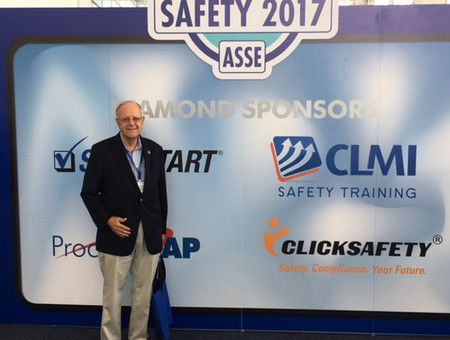



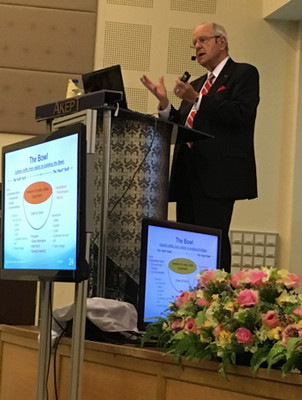
 I love talking with people and getting to know them. Sometimes it is really interesting and sometimes it gets quite funny. The other night I was at the local piano bar, sitting between two older gentlemen. One was an 86-year-old retired colonel who was pretending to play his imaginary drums along with the piano player and the other guy introduced himself to me 5 times in the first 10 minutes. Sometimes you just don’t know until you start talking.
 As the snow begins to melt and the spring winds arrive, it is time for cleaning up the place. Mud season is upon us as the snow melts. All sorts of curious things emerge from the melting piles of snow; stuff that was covered up and lost. (Just imagine: Years ago the settlers kept their animals sheltered next to their houses or barns attached to their houses so that they could care for them when the winter cold set in. They really had to do the spring-cleaning!)
 Each time the construction cycle picks up, more people get killed, mostly from falls. Some falls are the result of poor footing. Some falls result from poor housekeeping and clutter. Some falls result from inadequate barricading of edges or open holes in the floors. Some falls result from poor pre-shift preparations and the work is started before things are ready. Some falls result from people rushing to get the work done quickly. Some falls result from some people being careless.
 With all the uncertainties and variable working conditions, all of you need to be looking out for each other – I mean really watching and helping each other. Being ready and willing to stop unsafe work is important. It is critical that information flows freely so that everyone knows what is going on and are able to work closely together.