When I came into a big chemical plant as the new Plant Manager, I found a deeply dysfunctional organization.
They were demonstrating the poorest performance in the entire company. The workplace culture and leadership were very dysfunctional.
During the first year, we had to work hard to re-establish the basic standards; things were difficult and intense. There was still a lot of bad behavior like cover-ups, lying, turf battles, and stifled flow of information. To survive, we had to turn this around.
One bright spot was that there were well-trained fire brigades on each shift. The shift supervisors were the incident commanders. They all went to fire school for a week each year and had much supplemental training and Hazmat training.
Late one morning the fire alarm went off (this is especially scary in a chemical plant). The fire brigade responded beautifully and had the fire out in about 30 minutes. Then the people came together, self-organizing around the needs to get things cleaned up, repaired and back into production. We had about a one-month inventory of finished product, so time was short. The clean-up post this fire was a huge effort.
Yet, note: During this incident and recovery, information was freely shared, so everyone knew what was going on. The various crafts like pipefitters and electricians helped each other cross craft lines as they were capable, people worked extra overtime without complaining. Those close to the work were making key decisions about what needed to be done and did it. It was an entirely different experience from what had been the norm (prior to this emergency). We were back into production in just over two weeks. We all celebrated.
Then, in no time at all, everyone went back to the former, bad behavior within the environment – it was a “negative norm.” As I watched, I was really perplexed. Why couldn’t we work like we did in the crisis all the time, helping each other, making decisions close to the work, sharing all information, working together as a team, and not covering things up and/or lying?
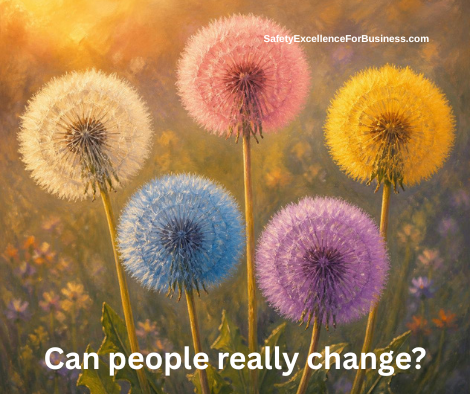
We Can Do It!
Once people can “see” their own behavior, experience the better way to be,
and then decide that they’d prefer to work together,
they can voluntarily rise above old toxic ways!
Caring about each other and our future together is ultimately, a good thing!
So, that became my leadership focus. After working with the people, openly sharing information, listening to each other, learning together, working together, respecting and honoring the skills and knowledge of the people, we, indeed, learned to work this way together. We built a level of trust that enabled all of us to work differently and much more effectively.
I lead this effort by walking around among the people, holding conversations of meaning, sharing, listening, offering help, accepting criticism, respecting their deep knowledge and skills. I did this for about 5 hours a day, every day, for about 8 years – providing the stimulus to keep this changed way of working alive, while providing the safe structure for it to manifest.
People learned to self-organize around their work, identify the problems and fix them. The morale and creative energy grew and grew. People felt great satisfaction in being able to deal with and solve their own problems. These were the conditions that had emerged during the fire crisis, but now we could live them all the time. These were the conditions that led to excellence in performance.
My work as manager shifted from totally focusing on things, procedures, equipment, etc., (although I did these as needed and we kept the standards high) to working to be sure that the conditions for excellence were maintained and shared among all the people. These were not focused on just one area like safety, but they applied to everything we did. Our total performance greatly improved and as we learned how to do this better and better–the improvements grew and grew.
Analysis of the Workplace Culture and Leadership
When I arrived at the Plant and during the first year, I used the traditional top-down management approach. We had to get things fixed. But then with the shift to a participative approach where we all learned and worked together as partners, everything changed for the better.
Please think about these ideas and begin to apply them where you work. Yes – your team, your group, your organization can learn to work in principle-centered and partner-centered ways as described above. Call me (716-622-6467) if you want to chat about this.
I have been working with Sebastian Wolf Siebzehnruebl to write a new book about working this way. The manuscript was submitted to the publisher so the book should be ready before too long. This too might provide supplemental information for how to achieve extraordinary results. Stay tuned.



Speak Your Mind