The Traditional Focus on the Parts – The way we see things has a big impact on how we try to figure out what is happening.
Let’s consider the job of a chemical operator. The first line supervisor, the superintendent, the accounting clerk, the mechanics, the truck drivers, the safety supervisor, the environmental engineer, the process engineer, the plant manager all see the chemical operator’s job differently. Yet they are not sitting in the operator’s chair. In the event of an incident, all these perspectives come together as separate parts, each with a different emphasis and all with an opinion, perhaps valid, perhaps not.
When the chemical operator is doing the job, he or she must integrate many knowledge pieces, skills, nuances, variables into a single whole. All the parts have to be done carefully and correctly. The chemical operator has to pull these all together in the right order and sequence. The chemical operator experiences the job as a single whole. The experience of running a complicated chemical process emerges as the work unfolds. When the operator leaves at the end of the shift, his “job” has included having dealt with a huge array of knowledge-based problem solving and safety awareness.
Another challenge is the specific job context is always different from one day to the next. Maybe it is raining, or windy, or bitter cold, or the equipment is stuck and hard to maneuver, or the job is blocked by mis-stored equipment. Maybe the pipes are frozen, or a valve is stuck, or a control room indicator is not reading correctly. The chemical operator needs to figure all this out in order to do the job safely and in a timely way.
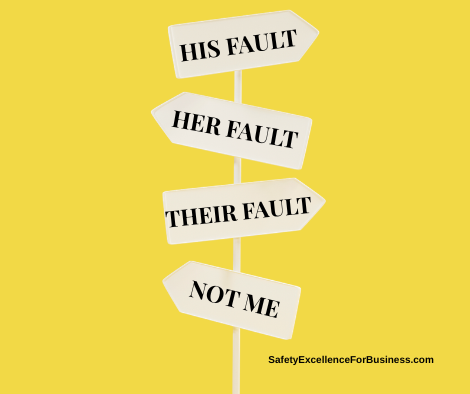
In the event of an incident or some screwup, all the people doing the required incident investigation are sitting in their safe place, looking at their particular part and deciding if the job was done correctly. We try to take the job apart and find where the mistake was made. The tendency is to blame the chemical operator and decide to do more training…again and again.
Let’s Turn This Around
The chemical operators doing the work are intelligent and trying to do their jobs as well as they can. The chemical operator is the person that most wants to NOT have an incident occur. All the people related to the job are intelligent as well. There is a lot of knowledge scattered among the people which is not usually shared. In sharing, the collective intelligence of the whole group goes up.
What would it look like if each of the people who are involved got together on critical jobs (this may be too much for every job) and had a focused conversation about the job with the chemical operator where the work will actually take place? People get out of their offices, put on their PPE and share their insights and learn together.
They would look at the job as a whole task and experience. This becomes a really good learning experience for everyone, and they discover that they really know a lot together. The various holders of pieces of information can each inform the other pieces, and in turn, the whole.
(This idea is not far-fetched; that is, in every newly built process, about to come online, yet never operated until go-time, this process of people having come together to determine what the best expectations for safe start-up and process control are, is absolutely necessary.)
As they talk together, new ideas will likely emerge about how to do the job better, more safely and effectively. When they are looking at the whole job, the interactions among the different parts become visible. The complexity of the whole becomes visible; people can see opportunities for improvement and make the needed changes on the job right then.
More and more of the people will learn how to do this and make appropriate changes. Doing this work with the chemical operator is far more effective than doing it to the chemical operator. This idea was first expressed by Mary Parker Follett in 1918, yet 120 years later, we are still learning.
If you’ve ever worked within a team of chemical operators, those sharing the same shift, sometimes over a number of years, their camaraderie is evident, and their shared knowledge – what they’ve learned together – is worn as a valued badge of honor.
You can do purposeful conversations like this and make big improvements.
I have found that most people want to be involved and make a positive difference. Suppose you gathered a small group around a particular job and have a conversation like this. Pay attention to what you see happening. Listen carefully for new insights. Support the people and encourage them as they explore the job this way and watch the collective intelligence go up. Start slowly and build safer, more effective processes together, while improving the knowledge potency of people and the effectiveness of human dynamics.
(At one of the chemical plants I managed, we needed to do Process Hazards Analyses on various chemical processes. These are not easy to accomplish, yet we found that people without direct knowledge of the process were as valuable to the review as those who were, because they brought a new sense of curiosity, asking questions which needed to be asked, because sometimes we’re too close to the work that we miss the forest for the trees. We gathered the Review Team with representation from each part of the business, including administrative, operators, mechanics, service people, and technical people. The results were thorough, and the collective knowledge gained was insightful.)
Navigating Complexity; From Control to Flow Using the Process Enneagram
This is the title of the new book that Sebastian Wolf Siebzehnruebl and I have written. Routledge will publish the book in early January 2027. It will give you many insights about working the way I have described earlier in this newsletter.
Please give me a call if you would like to talk about this work. Call 716-622-6467 between 10:00 am and 4:00 pm Eastern Time.