Opening a Big, Often Untapped, Resource…Communication

Most organizations rely on their research people, top management, and outside experts for the information they need to run their businesses and to solve their problems.

These people do their best to contribute to helping the organization – lending their expertise. A lot of money is spent on these resources; sometimes they are quite successful and sometimes they fail badly. Communication, however, is the most important.
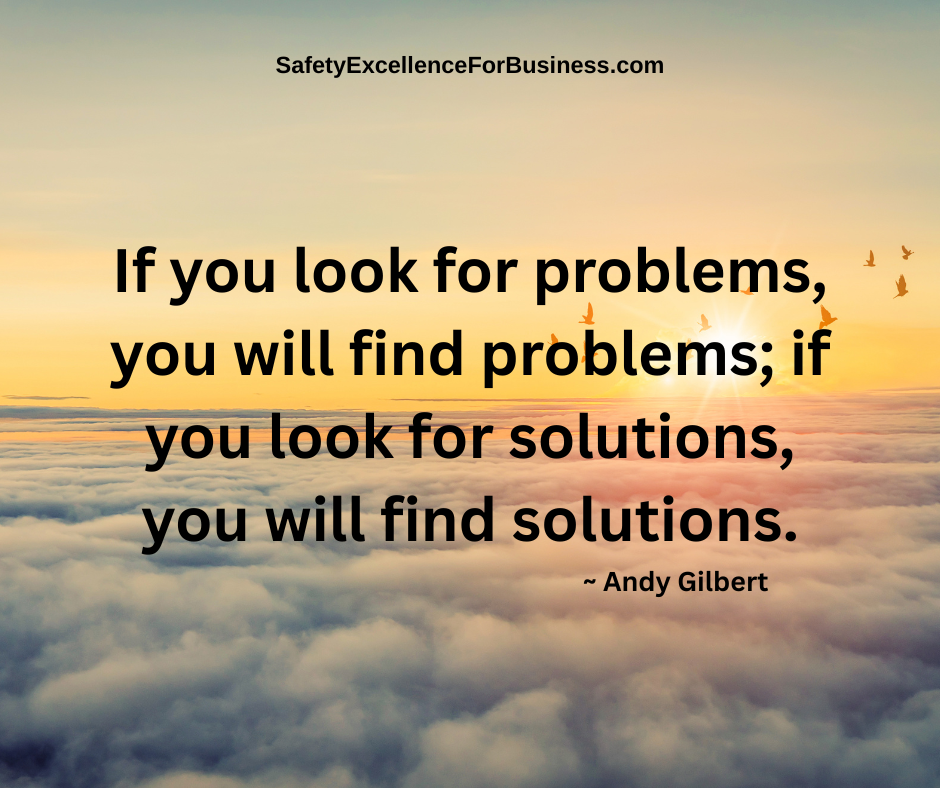
look for solutions in communication

As a society, we honor Ph.D.’s, experts and professors for their great learning. They often develop fine theories about problem-solving and learning. Often, we defer to them to do our thinking and to solve our problems. This is okay for tough technical problems, but we depend on them too much. Now AI has come into this dynamic.

When I was a plant manager, I asked the engineers to go into the plant and to talk directly and openly with the people who were running the production operations. Their first reaction was to resist because the engineers said that those people did not know the technology. I pushed them further, pointing out that those running the processes live with the processes and have a lot of information that the engineers did not have, and the engineers could teach them the critical technology. As they talked together a lot of new information surfaced that was very helpful.

Not only did the operators of the processes learn more about the
technical aspects of what is happening and the “why” of the processes,
but the engineers learned a lot from the operators – how they have to
troubleshoot, for example, what different temperature and flow concerns
surface and how they have to respond, what alarms/alerts are
most difficult for them to address.

A big mistake many managers make is to ignore the huge amount of information and energy that the people across their organization actually have. Top management, engineers and experts have only half the information they need to successfully solve problems.

When they build trust among the people, they become willing to share what they know. As they all talk with each other, they discover that even more information emerges. The gap between work as imagined and work as done almost disappears. People open up and begin to use their discretionary energy to help to improve things. This discretionary energy is a gift the people will give in this environment.

Some Basic Keys… Relationships and Communication

Relationships are so important. We all need to be treating each other with respect, listening to each other, and learning together. Caring for and helping each other is also very important.

Being sincere with each other is also important. Telling the truth and respecting the ideas people bring up is also important. As people begin to speak up, it can feel quite risky so let’s make it safe for them.

Dedicating time each day to go into the organization, talking with the people about substantive issues, listening carefully, and helping people to solve their own problems is another important thing you can do. It is about learning how to hold “deliberate conversations of meaning – specifically looking for betterment.”
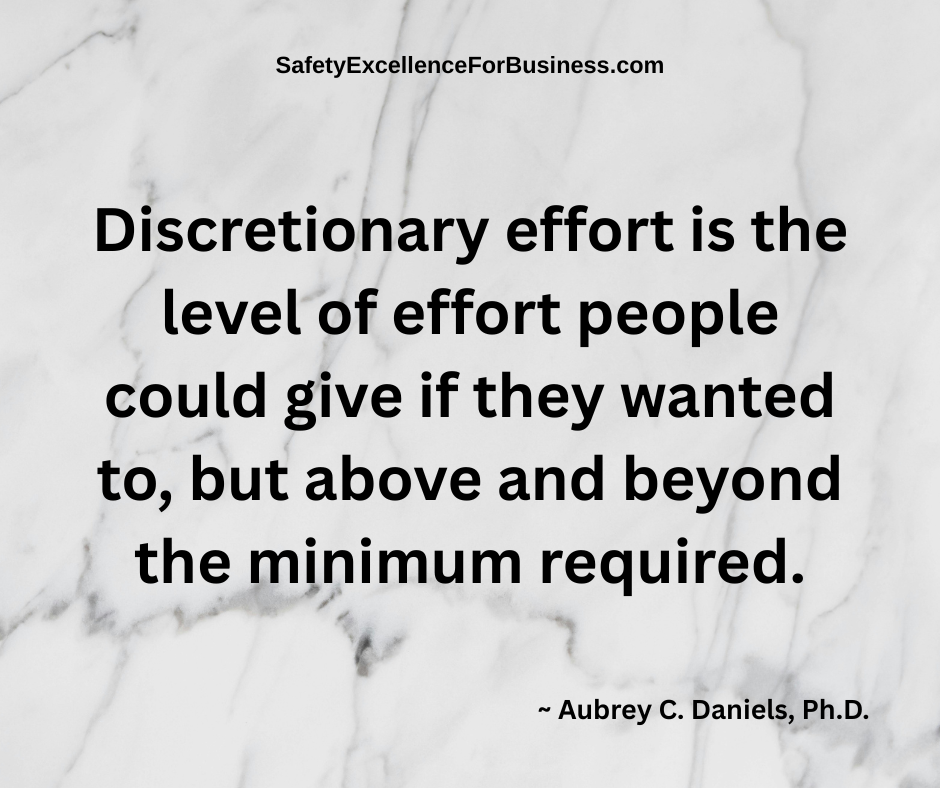
discretionary effort of the people

The Payoff

As these interactive, learning processes develop, the collective intelligence of the organization goes up, everyone gets smarter. More and more people begin to solve their own problems and find that this is quite satisfying and fun. As this spreads, the performance of the entire organization improves, problems get solved more quickly, close to the actual work and earnings improve.

Call me at 716-622-6467 and let’s discuss how focused conversations can help your organization make a huge difference too.
Peeling the Onion: Exposing the Various Layers of Safety in the Workforce

Let’s peel back the onion on some recently published Safety Stats.

The number of people killed at work dropped in 2020 – Good News!

The Year 2021 was full of changes and challenges. Much of the news was pretty negative. But, one piece of good news was that the US Bureau of Labor Statistics reported that the number of fatal occupational injuries in 2020 dropped from 5,333 in 2019 to 4,764 in 2020. This is the first drop in fatalities since 2014. This is good, but no one knows why this happened. There are many possible things that could have had an impact. We must peel back the onion and look deeper.

exposing the layers of safety stats

Here are some stats:

  • Did the COVID epidemic have an influence? Probably.
  • Were there fewer businesses operating? Yes.
  • Were fewer people actually at work? Yes.
  • The pressures of excessive overtime were up as businesses began to expand again but could not get enough people to fill all the positions. Did this have an impact? Maybe.
  • Were the numbers unclear because there were more part-time workers? Probably.
  • Was management actually doing a better job in the safety arena? I hope so!
  • Even though there was a lot more stress among the people with all the COVID worries, the number of murders dropped by 14.5%. Women made up 16.3% of workplace homicides. Maybe people were handling the stress better than usual. I hope so!
  • Exposure to harmful substances went up, including overdose of drugs. Was this from increased workplace pressures. Maybe.
  • Fatal injuries among law enforcement people went up 18.6% to 115 people. Thank you for your courage!

This is a complex problem with which all of us in safety are working to improve. The number of fatal injuries in 2020 was lower than it has been (and that is a good thing!), but the reasons are multifaceted. Please keep up the safety work you are doing and we’ll see if the 2021 numbers improve again.

What Do Workers Want?

American workers want better stability, safety, and leadership.

Randstad, USA, a large professional and commercial staffing organization, recently conducted a survey of their clients, finding that the COVID situation had an enormous impact in raising the workers’ concerns for safety. Workers want their leaders to clearly take the lead, making and acting on decisions to improve their safety and the stability of the workplace environment. Workers want clear standards on vaccinations and working conditions like spacing and overtime considerations. This is a big challenge since guidance from the Government, OSHA, the CDC and the courts is in such flux, and the shortage of skilled workers complicates this even further. This is a huge source of stress on everyone. It is critical that there is open, honest conversations among all the people so the best, most logical decisions can be made. This is really the work of leaders and the people want them to step up and lead.

Getting back to the onion metaphor…the Leader needs to be rooted (strength of conviction, knowledgeable) and have a strong inner core…yet be flexible, able to listen, communicate and most importantly, to be able to step up and lead.

Call to Action: As you peel back the onion around the safety performance of your workplace during this past year, what will you find? Contact me (716-622-6467) and I’ll share with you the “Layers of Safety” I use when speaking to Leaders on becoming the most effective they can be in leading Safety in the Workplace.

removing layers of safety stats