 As this year comes to an end, we will be looking at our overall performance to see how we did and to plan for 2017. We will usually look at our injury statistics like the total recordable injury rate and try to determine how we performed. Often quite independently, others will look at other performance indicators to see how they came out. We act as if these are independent of each other, but in our organizations everything is connected so all aspects of performance influence each other. Everything happens through the people. All the parts are interconnected. Excellence in safety performance is strongly related to our total performance because it all works through the will of the people.
We traditionally try to apply safety and other metrics to our organizations in a machine-like fashion. We see that something needs to improve so we push harder as if we are pushing a wagon up hill. Too many regulators and managers sit in their offices trying to imagine what needs to be done and write a new procedure or rule so that things will be better. Then they issue edicts pushing everyone harder. However, the work as imagined is never the same as the work as done. Why do managers think that sitting, bound to their office chairs, that they know everything? How can they? Then at the end of 2017 we will do this all over again trying to understand why things did not get better. Around and around we go!
We break this vicious cycle by opening up ourselves to a different way of thinking, seeing and being.
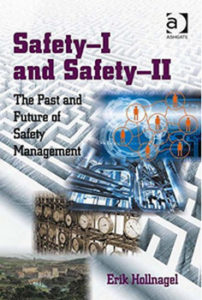 Work-as-imagined and work-as-done are ideas developed by Erik Hollnagel in his book, Safety-I and Safety-II (2014. Ashgate Publishing Ltd., UK). Safety I is our traditional top-down management approach to safety management where rules and procedures are issued by those far from the actual work. This is like the approach discussed in the proceeding paragraph. I think that a lot of people are trying to do good safety work from the Safety I perspective, but the results are not improving fast enough.
For example, the Bureau of Labor Statistics (BLS) recently reported that the rate for nonfatal injuries and illnesses per 100 people dropped to 3.0 in 2015 from 3.2 in 2014 and 3.3 in 2013. That is a 10% drop over three years. That is way too slow! In 2015 2,900,000 injuries were reported. That is WAY TOO MANY people getting hurt. In an earlier paper the BLS reported that the number of fatalities has hovered around 4,700 people a year for the last 5 years. This is WAY TOO MANY!
This is not just a US problem. For example, Worksafe, New Zealand recently reported that the health and safety laws have had little effect on reducing fatalities further.
While driving safety from the top has had benefits historically, the effort is having less and less impact. But when we change our approach to working with the people to co-create our future, things change for the better quite quickly. This is true! It’s proven!
In the work of Richard N. Knowles and Associates, we approach the organization as if it is a living organism. Time after time coming out of our Safety Excellence Workshops, the performance improves quickly. When we engage with the people this way and help them to co-create their safety future, building on the positive strengths of the people, safety and all other aspects of their work get better quickly. For example, when I was the Plant Manager at the DuPont Belle Plant in West Virginia we worked this way, and our injury rates dropped by over 95% and earnings rose 300% in just three years. This is similar to Hollnagel’s Safety II approach.
Whenever we, at Richard N. Knowles Associates, work in organizations the safety and total performance improves quickly. Everything happens through the force of the will of the people. We release this force helping the people to co-create their shared future. Then we show them how to sustain their work for the years ahead. All dimensions of the business improve; costs are lower, productivity is higher, morale is better and far more people are working safely.
Call us at 716-622-6467 so you can release the positive, creative forces in your organizations quickly!
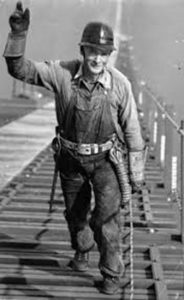 Consider the Golden Gate Suspension Bridge (San Francisco) built between 1933 and 1937, an architectural marvel, thought to be impossible because in order to bridge that 6,700 ft. strait, in the middle of the bay channel, against strong tides, fierce winds, and thick fog, meant overcoming almost impossible odds. But it was built, with a grand opening in May of 1937, deemed, at the time of its completion, to be the tallest suspension bridge in the world as well as the longest. A man named Joseph Strauss engineered many new ideas, including developing safety devices such as movable netting, which saved 19 lives; though in all, there were 11 men lost during this construction. Thousands of men – workers of varying ages and from varied ethnic groups – came together to complete this project. (They had to listen and learn to be successful together.)
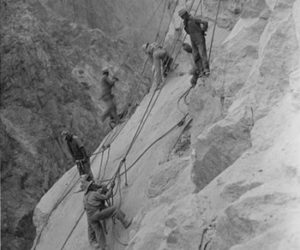 Consider the feat of building the monumental Hoover Dam (1931-1936) – a miracle of technology and engineering. No dam project of this scale had ever been attempted before. There were 21,000 people working at that site with approximately 100 industrial deaths. The walls for this structure – that would uphold the weight of the dam – required workers called “high-scalers” who excavated the cliffs, dangling on ropes from the rim of the canyon. Can you even fathom this?
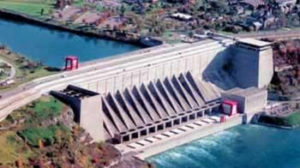 Consider the great Niagara Power Project (1957-1961). During construction, over 12 million cubic yards of rock were excavated. A total of 20 workers died. When it opened in 1961, it was the Western world’s largest hydropower facility. Many people, including from the “greatest generation” and the “traditionalist generation,” worked together on this project. It was a 24/7, multi-year project.
 But, the machine view of organizations is the dominant paradigm right now. We direct the people to work in tight procedures. We manipulate them to do things right. We punish them when there is an injury or incidents. We look for root-cause. We think that if we can take things apart and understand the parts that we can understand the whole. Almost all the effort is engaged in doing things TO the people as if they were just interchangeable parts of a machine. Most people push back against authority in this paradigm. This is a win/lose environment.