We are constantly looking for indications relating to the strength and health of the safety climate in our facilities.
In January I talked about leading indicators I have found useful for occupational safety, health and process safety management. Another quick way to assess the safety climate relates to looking for the use of improper, makeshift tools. These can often be seen as we move through our facilities.
 At a recent safety conference I learned about a way to quickly assess whether a manufacturing site was cutting corners and trying to get by on less than the best. The person speaking, Ewan Alexander of BHP Billiton, said that he looked for improvised tools being used.
An example is a wrench with a piece of pipe shoved over the handle to make the handle longer and thus be able to turn a bolt that should be turned by a larger wrench properly designed for the job. Pounding the handle of a wrench to loosen a bolt is another example of improper tool use.
Improperly Using PPE, like using a small respirator when full-face protection is required, is an example of cutting corners. Using dirty, partly opaque face-shields is another example. Using the wrong choice of gloves is another indication of cutting corners and poor decision-making.
The presence or absence of these problems is something we can observe if we pay attention.
 How important it is to stay on top of global strategic trends and innovations while aligning our efforts with business strategy.
  Each of us, as we travel to and from our work spaces want to be “safe and sound”—we want to return at the end of the day or at the end of our work-shift to our loved ones—safe and sound.
 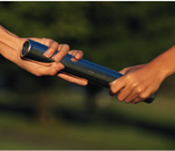 There are three main aspects to Partner-Centered Safety.
 Safety excellence is achieved and sustained one day at a time, day after day.
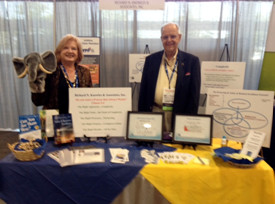 Yes, the elephant that got in the way of having the conversations that matter? You did? Oh, you have one of those too?
 Another paper from an award-winning company showed their outstanding progress in lowering their total recordable injury rate from around 10 to 0.5 through a steady progress of improvements over 10 years. Their work was out of the Newtonian/Cartesian perspective, quite similar to what Mathis and Galloway teach.
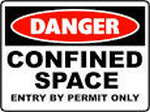 There is no doubt that work in the oil and gas industry is tough and dangerous, but that is no excuse for disregarding the health and safety of the workers. Almost all the deaths occurred when safety procedures were not followed. There is plenty of safety information available relating to tank cleaning. Have we not learned the lessons of improper confined space/vessel entry?
 But, the machine view of organizations is the dominant paradigm right now. We direct the people to work in tight procedures. We manipulate them to do things right. We punish them when there is an injury or incidents. We look for root-cause. We think that if we can take things apart and understand the parts that we can understand the whole. Almost all the effort is engaged in doing things TO the people as if they were just interchangeable parts of a machine. Most people push back against authority in this paradigm. This is a win/lose environment.
 People are often reluctant to speak up in these negative environments. Ideas for improvement never surface. New employees are negatively influenced and led astray. Supervisors have a very rough time getting the people to do their work properly. Grievance rates are high and much time is wasted needlessly because these are not addressed at an early stage.