 In my reading, studying and talking with many people, I have found that over half of the fatal accidents are often unanticipated and missed using our traditional approaches to accident prevention. The Heinrich Accident Triangle is very useful as we look at unsafe acts at the base of the triangle. Lots of slips, trips and falls are avoided as we do this.
But, many potential, fatal accidents don’t show up in this work. Only very few of the unsafe acts at the base of the triangle ever lead to a fatality. Why does a man fall from a cell phone tower when he has his fall protection harness on properly? Why does a man rush down the ramp to quickly fix something at the end of his shift where big paper rolls are stored prior to loading, when he knows the dangers of getting caught between the rolls and getting killed? Why does a man jump onto a large baking oven conveyor belt in a hurry to enter the oven before it is cool enough to do some maintenance and gets killed? These sorts of impulsive, tragic actions aren’t picked up in our normal safety audits.
Yet many of the reports of fatal accidents indicate that the conditions and impulsive behavior surrounding these accidents were obvious in hindsight. As people think about the fatality, they often see that, while the obvious conditions and impulsive tendencies were there, they were not in people’s everyday conscious thinking.
Often, the causal details are a mystery like in the situation with some of the fatal falls from cell towers and the workers have their fall protection gear all on but somehow they didn’t have it hooked up for a fatal moment. Or the man caught between the big rolls of paper or the guy who got cooked.
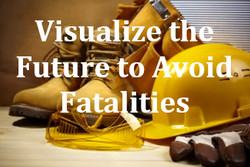
One possible approach to eliminating these sorts of fatalities is built on the belief that the people closest to the actual work are in the best position to see the obvious if they open their minds. Suppose that, once a month, the various work groups take 30 minutes to think about their work with the focus on identifying the conditions and work practices possibly leading to unlikely events and potential fatalities. Think about what work the people actually have to do to get their job done. They would open their minds to unlikely possibilities and see if there is something coming out of this that would alert them to a potential fatality. Including a few people from another work group with fresh sets of eyes would be helpful.
Here are some questions to consider:
- Are there high pressures to get the work done quickly?
- Do people just jump in impulsively?
- Do the people talk about both safety and production and the need to do both well?
- Is there information that needs to be shared that would help to prevent a potential fatality?
- In your safety culture, is it okay to stop the job to fix a safety issue?
- Are procedures gradually being changed that might weaken the protection?
- Do people really trust and help each other?
- Can you reach out to an impulsive person and hold him/her back?
- Those closest to the work know their work and their work-mates better than anyone else and can explore the unlikely possibilities. Supervisors and managers should also be included and support this effort.
Once they have discovered a potential fatality situation, they could put together a team to focus on it and develop ways to eliminate or modify the conditions, behaviors and procedures that could lead to a potential fatality.
This important work should be shared with all the other people in the organization so that everyone can learn and improve. Keeping track of these disaster prevention sessions could become a leading indicator of the safety culture.
 Talking together is one of the most important things we can do to help to improve the safety in our workplaces. Letting people know that you care about them and respect them. But too many times I have seen supervisors and managers talking down to their employees ordering them to do this or that.
 At a recent safety conference I learned about a way to quickly assess whether a manufacturing site was cutting corners and trying to get by on less than the best. The person speaking, Ewan Alexander of BHP Billiton, said that he looked for improvised tools being used.
  Safety excellence is achieved and sustained one day at a time, day after day.
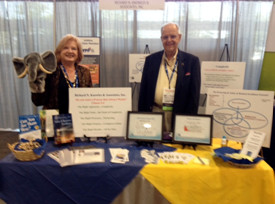 Yes, the elephant that got in the way of having the conversations that matter? You did? Oh, you have one of those too?
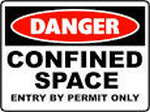 There is no doubt that work in the oil and gas industry is tough and dangerous, but that is no excuse for disregarding the health and safety of the workers. Almost all the deaths occurred when safety procedures were not followed. There is plenty of safety information available relating to tank cleaning. Have we not learned the lessons of improper confined space/vessel entry?
 Partner-Centered Safety is a robust, proven way to bring people together to achieve sustainable levels of safety excellence being based on deeply held beliefs and values.
 The first part of this work is sharing all information and talking together about it. Another part is building trust and interdependence with the people as we openly discuss what is happening, what we are doing and why. The third part of this work is helping people to see the big picture and how important their part is to the success of the whole business.
 Most of the safety people I’ve come to know approach organizations as if they are mechanical things to manipulate. Organizations are structured in functions. Knowledge is structured in pieces. People are narrowly skilled. Motivation is based on external factors. Information is shared on a need to know basis. Change is a troubling problem. People work in prescribed roles seeing only their part of the work. If change is needed people are moved around like chairs. Training is provided in abundance. Safety programs are set up as step-by-step processes where things are arranged in a prescribed sequence.
 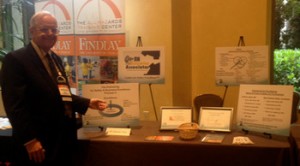 It was fascinating to see the contrast between the usual, linear, mechanical approach to safety and The Complexity Leadership Process (CLP) that I discussed at my display table. A large number of people talked with me at my display table about The Complexity Leadership Process which was new to all of them. Many could not believe how quickly and dramatically the safety performance improved using the CLP. At one level the CLP looks like a simple employee involvement program, yet it is much more and also different at a deeper level than the usual employee involvement processes. One fellow, who recently wrote a book about changing the safety culture to excellence just brushed the CLP aside as something he’d already seen. The approach to safety excellence he’s written about involves 43 linear steps that take 3-5 times as long as the CLP and require a very high level of persistence and determination over many years.