Breaking the Pattern – Allowing the New to Emerge…via The Partner-Centered Safety Leadership Workshop

goldfishIn many of our newsletters, I have talked about helping organizations co-create their safety future using the Process Enneagram© complexity tool in our Partner-Centered Safety Leadership Workshops. This is a powerful tool to help bring the people together around their safety challenges – breaking the old patterns, and co-creating a better, safer future (together).

Here is a brief description about how our Partner-Centered Safety Leadership Workshop takes place:

In a recent workshop, a cross-section of the people, including their manager, came together for a day. There were about 19 people present. We began with the question, “How do we improve our safety performance?” With this as our central focus, we engaged the people with the Process Enneagram©. Everyone participated in developing their living, strategic safety plan over the next four hours in an interactive dialogue in which everyone participated, including delving into the issues and behavioral patterns that keep recurring.

Together, the group determined what new commitments needed to be made (by all of the team) in order to get where they wanted to be, together – to achieve the best results for a safe workplace.

We then asked the people to identify what the top four things were that they needed to immediately work on and develop a plan of action. Then, they self-organized into four teams of about equal size to work on their respective topic. After about two hours, each team reported out to the entire workshop group, sharing their ideas and plans to improve safety and to solve their problem. They identified their leader, the team members, their plan of action and when they would be meeting again to do their work.

After the workshop, the participants shared what had happened with all the others in the organization who had not attended, asking for ideas for improvement.

In order to sustain this work, their manager needed to talk with all of them frequently about the progress of their teams. The manager supported each team with the resources and contacts they needed to do their work. About once a month, all the teams came together and reviewed their progress with each of the other teams and the manager. Open communications with the rest of the organization kept everyone informed of the progress.

The manager talked with everyone in the organization about their Safety Strategic Plan, sharing information abundantly, listening carefully, and building credibility. He/she also spent time with each team to understand their work. The manager often helped the teams to contact others in the organization or suppliers so they could make progress. The manager created the environment of open communications and trust to make all this happen and to sustain the work.

When Claire and I returned to this organization after about four months, each team met with us to discuss their progress, frustrations and successes. Every team had made progress and everyone was talking about how to help the organization improve. Several teams had completed their initial project and had begun to work on the next piece of work to help the organization get stronger and safer. Almost everyone in the organization was talking about ways to help to improve the organization’s safety performance. Clearly, the organization had markedly improved, moving forward to a better, safer workplace for everyone. And they co-created that future (together).

Discover how your organization can see safety turnarounds quickly. For more information, contact us at 716-622-6467.

Complexity & Change are the New Normal: Leading the Way

Those organizations that are achieving safety excellence recognize that they must:

  • Abundantly share all information about their safety, environmental and business performance,
  • Engage openly and honestly with everyone building trust and interdependence and,
  • Help everyone to get a sense of their collective whole and see their part in achieving total success.

The National Institute of Water and Atmospheric Research (NIWA) in New Zealand is on the pathway to safety excellence. We worked with Carl Stent, the NIWA National Manager, Safety and Wellbeing, in a series of 7 full-day workshops involving over 100 managers and scientists to develop clarity and focus on the best ways to help their people working remotely, like in the Antarctic, to make the best possible decisions and work safely – every day, every task.

National Institute of Water and Atmospheric Research

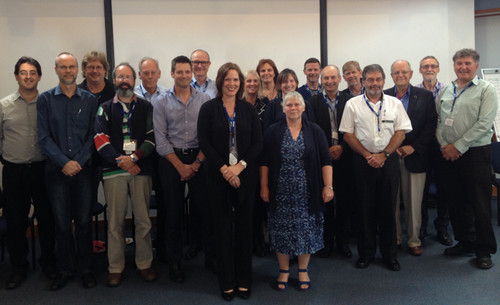
This (picture above) is their Operations Leadership Team who met with us in Wellington for two days at the beginning of our work with NIWA. We helped them to see that organizations are complex, adapting, self-organizing networks of people. Using the Process Enneagram©, our proprietary complexity tool for having the focused and disciplined conversations, they were able to effectively address their opening question, “How do we build and sustain an effective safety culture across our organization?”

The energy and excitement built during the day as information, ideas and breakthroughs emerged during the workshop. The Process Enneagram© map they created is serving as their living strategic safety plan.

We conducted workshops in six NIWA Centers across New Zealand, giving us an opportunity to meet a lot of outstanding people and to see a lot of their beautiful country. We also conducted one public and one private workshop which were also extremely successful in opening people up to the ideas of complexity and to approaching safety from this perspective. With Carl Stent’s ongoing, excellent support, NIWA is on the road to safety excellence!

Shifting the Safety Culture to Excellence

When we work together with our people, we can shift the safety culture.

self organizing leadership cultureThe first part of this work is sharing all information and talking together about it. Another part is building trust and interdependence with the people as we openly discuss what is happening, what we are doing and why. The third part of this work is helping people to see the big picture and how important their part is to the success of the whole business.
These are the core elements of Self-Organizing Leadership. When we co-create our Safety Strategic Plan™ using the Process Enneagram©, we produce a living strategic plan that we use going forward. We keep it posted, talk about it weekly and modify it as things change.

We have found that walking around and talking with, rather than at, our people often feels new and awkward for many managers. It takes some practice and persistence.

Being in dialogue with the people makes us feel exposed and uncertain. Sometimes people ask questions we can’t answer. That is okay – just get the answer and go back to talk some more. This is not a spectator sport. There is a Spanish saying, “It is a lot easier to talk about the bull than be in the ring.” Yet, this walking around and talking and listening together is key to our success. In these conversations we are building the BOWL. This is the container that holds the organization together. It consists of our vision, mission, principles, standards, and expectations. As people learn to function within the BOWL, they find the freedom to create new solutions to problems, taking the lead to solve them and become leaders.

When the culture shifts in this way, the people begin to see other things that they can do to improve the business. Quality problems that were once ignored get solved. Cost problems that lingered get fixed. Customer issues among the plant and their customers, like delivery requirements, get solved. Turn-around times between production campaigns needed to clean and re-pipe the equipment drop from weeks to just days. I have seen all these things happen.

When the safety culture gets right then everything gets right! Moving to safety excellence becomes the leading wave for total cultural change to excellence.

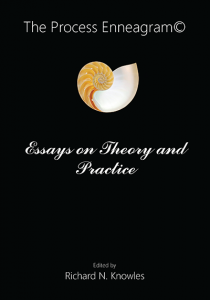
The Process Enneagram©: Essays on Theory and Practice

In my previous Blog on The Complex Systems Leadership Process© I’ve been thinking that it would be better to name it The Complexity Leadership Process© since it really is not a system as in systems thinking.

The Complexity Leadership Process is another name for Self-Organizing Leadership©. These are adjustments to my thinking relating to these ideas.

Self Organizing Leadership This Blog is focused on my new book, The Process Enneagram©: Essays on Theory and Practice. I am the editor for this book that was just published by Emergent Publications. It can be purchased directly from their website.
This book grew out of the call for papers for the Special Issue of Emergence: Complexity and Organization, Volume 15, Number 1, March 2013 on The Process Enneagram. In that call for papers I received 9 papers from the United States, Australia, New Zealand, Canada and the United Kingdom. Since we could only publish four of them in the Special Issue of Emergence, for space reasons, Kurt Richardson, Director of Emergent Publications suggested that we publish all 9 papers in a book.

The book begins with a brief Introduction by me of the Process Enneagram. The 9 essays include two of an historical and theoretical nature by Tony Blake and Cameron Richards, one describing the use of the Process Enneagram at a Managing and Engineering Complex Situations Workshop to help a group of engineers get a better sense of the complexity paradigm and one paper is about using the Process Enneagram with groups of people in industrial organizations helping them to address their complex issues. There are two papers describing the use of the Process Enneagram with graduate students to help one class design their classroom experience for the semester and the other class to get a better understanding among a class of engineers of the flow of technology developments over the last few years from the perspective of complexity. Another describes the use of the Process Enneagram in helping to develop more cohesive, effective teams over a three-year period. Another paper correlates the energy flows in the Process Enneagram with those in an ancient Chinese cosmological, leadership model. The last paper uses a card trick by a famous magician to illustrate how one feels while moving through the work of the Process Enneagram.

These widely ranging essays open up a broad scope of richness in The Process Enneagram helping people to see and learn more about it from these widely ranging perspectives.

Sometimes I have referred to the Process Enneagram as a tool, but this is misleading in that it is not something like a wrench. I see it more and more as a series of nested processes that help guide important conversations and reveal the patterns and processes that are running within the organization. In using the Process Enneagram with people deeper understanding and better communications develop.

The importance of the Process Enneagram is in its use to help people work with complex, wicked problems, build the social connections they need and build the emotional energy and commitment to do their work.

One area where I have used The Process Enneagram is with people in organizations to help them improve their understanding of all their safety issues and develop a living, strategic plan for them to use going forward to sustain their work. Using The Process Enneagram is the first step in the Complex Leadership Process helping the people to get clear, focused, coherent and energized. As people develop and use The Process Enneagram they experience two levels of transformation. One is their own personal transformation and the other one is the transformation of the organization.

When the leaders from across the organization develop their strategic safety plan, and engaged in the transformations, they can take it to all the others in the organization to share and further develop it. If people are willing to be open to learning and growing The Process Enneagram always works in amazing ways.

In the previous blog I describe the Complexity Leadership Process and you can see the important role at the start of the work that it plays.