Teamwork in Action: Self-Organizing Teams

The most fun I ever had in leading organizations was when we had all learned to work together in self-organizing ways using Partner-Centered Leadership ideas and the Process Enneagram to guide our inquiries.

People were full of creative energy, coming up with good ideas about how to solve their problems and do better work. We shared information about all that was going on – feedback was straight forward and useful. We all learned together through teamwork, became more resourceful, and better able to handle the chaos and complexity of the world around us.
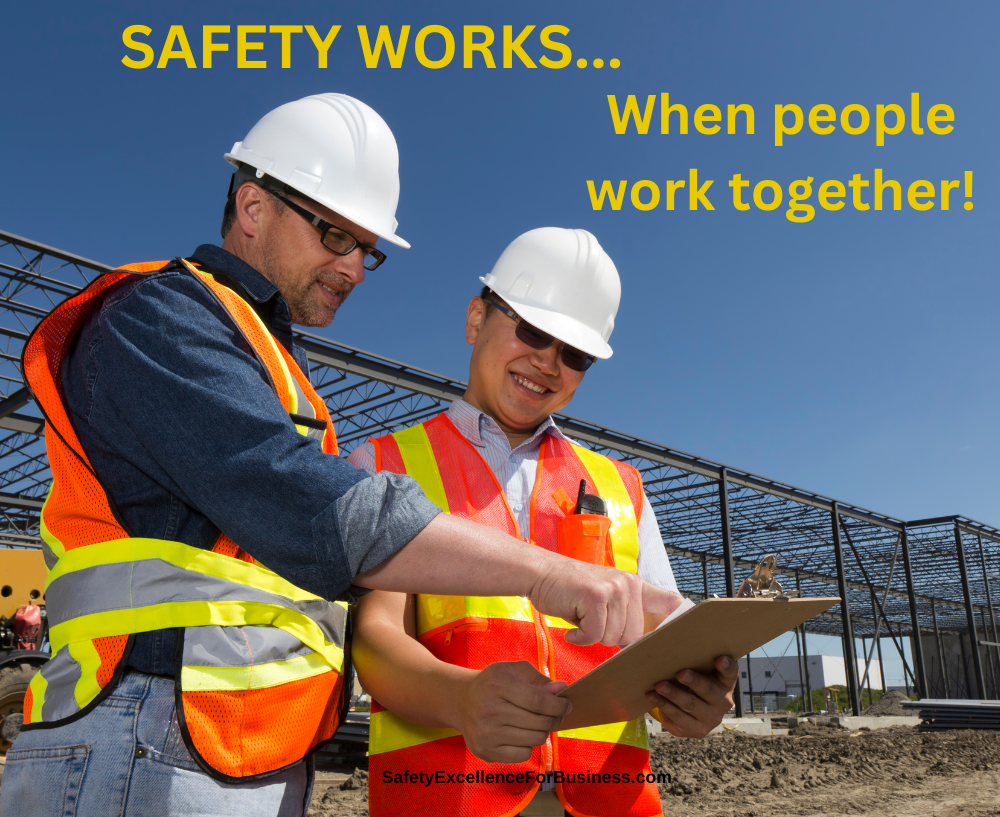
when people work together through teamwork safety works

In the old days, when I was driving the people from the top down, the work was hard and not a lot of fun. Many days I was just worn out with all the negative energy bring sucked out of me.

As we all learned to work this new way, my role shifted to being a cheerleader for all the great work that people were doing. The gift of their energy above the minimum made a huge, positive contribution.

Why Teamwork Works

Everything that happens within an organization depends on the agreements that the people co-create together about how to self-organize and do their work. Every part of the organization lives within these bounds and standards. In using the Process Enneagram, the people talk together, listen, share, learn and do the work. The people at all levels are engaged and participate in this work. They build together on their shared values.

Every part of the organization, including those at the top, those in research, sales, manufacturing, maintenance, purchasing, human resources, etc., have these ways of working together.

If someone tries to develop separate ways of working, the organization begins to crumble. For example, if I try to do things differently in safety that conflict with these shared ways of working, people get confused and trust drops. Over time this can lead to the sorts of dysfunctional organizations many of us know so well.

We all have a shared responsibility to nurture and develop this way of working together because the results that are achieved are so much better than dysfunctional organizations can achieve.

At one level, each part of the organization is engaged in different sorts of work, but at a deeper level everyone is engaged in this same way of working and building together. Trust levels got a whole lot better. Interdependence among the various groups became stronger. Disagreement and arguments were fewer because we had learned to talk together and listen for the best ideas.

Our organizations are full of people who are quite intelligent. As we worked and learned together, the collective intelligence of the entire organization got stronger, problem solving got stronger, cooperation and helping each other became more common. As we became more successful, we celebrated each other’s successes.
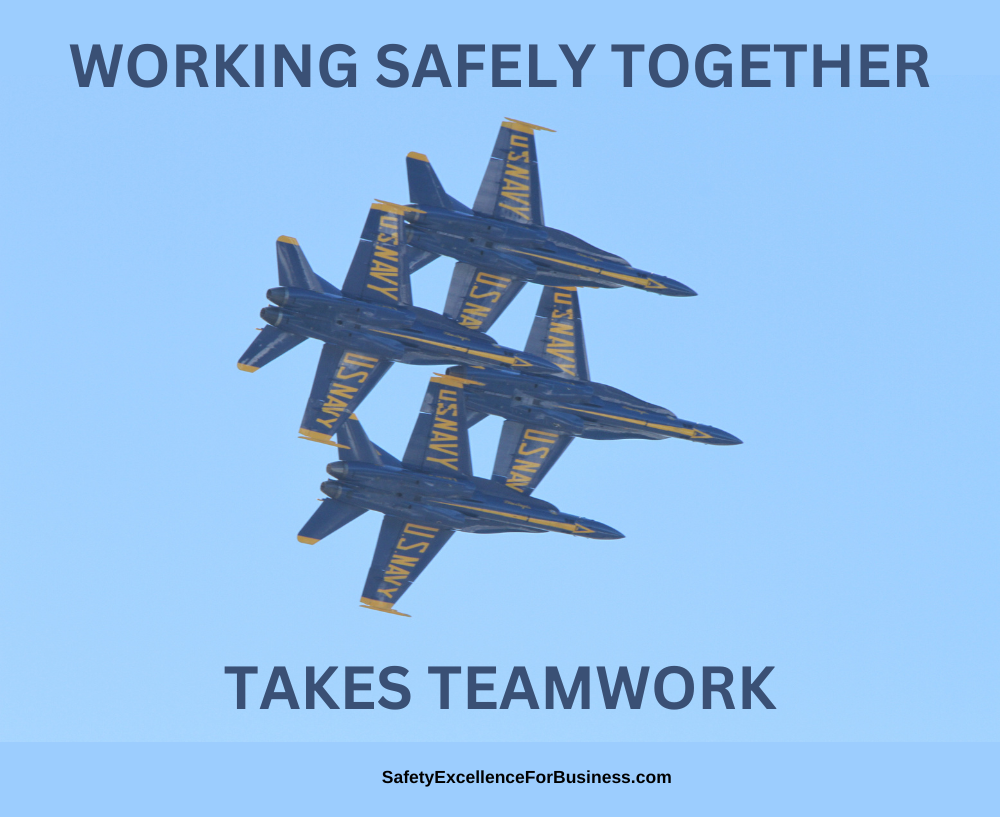
work safely together through teamwork

The Payoff of Teamwork

In one plant of over 1,000 people, in working this way, we went from one of the poorest performers to one of the best of all the 150 plants in the company in just four years.

That was a lot of work, but it was so much fun and satisfying. People are still talking about the experience 30 years later.

Path Forward

If you want to learn more about this way of working and learning together, please give me a call at 716-622-6467 between 10:00 am and 4:00 pm EST.

A Time for Extra Alertness and Caution for Workplace Safety

It is hard to remember a time like this with so much serious stuff going on.

The COVID questions linger, the war in Ukraine is of huge concern, supply chain problems mess up schedules and production plans, the shortage of computer chips, the shortage of people to fill the jobs which forces excessive overtime and stress, inflation rising, and the move into Spring. All these distractions can cause major problems in the workplace ranging from the shortage of supplies, people, the time to get the work done, and workplace safety.

for safety protocols stay alert

There are also many problems that have an impact on our families and cause us stress. It is hard to leave these problems at home when you go into work. These can be quite distracting leading to mistakes, incidents, and injuries.

More than ever, we need to be working in ways that will relieve some of these problems, but the answers are neither simple nor easy to implement. It is important to share information so that everyone is on the same footing and knows what is needed and going on. Doing things the same old way may not be the best approach. Get together and talk about things and see what is best. As you talk, new ideas will emerge which may be useful and apply to your own situation.

There’s a big difference to note: When you are open to other’s ideas, to discussing pros and cons, to seeking new ways for doing things, to listening to others…(rather than to doing things my way or the highway…) then good things happen…effectiveness rises! And so does your team’s attitude, and in turn, safety.

As you ponder what you will need going forward, do not forget the daily tasks relating to doing your jobs safely. Be careful with hurrying. Resist cutting corners. Don’t pencil-whip your audits and other reports. Follow up on near misses. Take the time to really talk together about what is happening and how you can best work together to get things done.

Many of the things I have been reading indicate that all these distractions are causing real problems with increased injuries and incidents. These are real situations in which we are all trying to work safely.

New Days Ahead of Us for Workplace Safety

So much of our traditional approach to improving workplace safety is based on mechanical ideas about how our organizations work to get things done. In the past, the predominant approach has been based on seeing the organization as if it is a machine and the people as interchangeable parts. This goes all the way back to Frederick Taylor’s Principles of Scientific Management, published in 1911. Rules are issued by Management or OSHA and everyone is expected to follow them. Things are driven from the top of the organization with little feedback up the line.

workplace safety is based on mechanical ideas

We live in a world of work-as-imagined, often instructed by people who have never done that work! Most people will try to do the work well, but it is hard to sustain. There are many safety professionals who are stuck in the old way of doing things, writing procedures from their office without input from the person needing to do the job. This is, sadly, still the basic top-down approach of most of the people in the American Society for Safety Professionals – with engagement and involvement of people doing the job lacking.

Now our understanding of how organizations work is changing. When organizations are seen as if they are living systems and people are vital parts, new opportunities open for success. Organizations are complex, adapting, self-organizing networks of people who come together in vital new ways.

Rather than thinking of the organization as if it were a machine with the parts grinding away, we can think of it as a vital, active network of people, self-organizing and doing excellent, sustainable work together.

A useful metaphor is to think about the sport of soccer. Everyone knows the dimensions of the field and the out-of-bounds lines. Everyone knows the rules of the game. At work in our conversations together, we co-create these boundaries and rules, so we try to live by them. In the game, the referees are like the first line supervision who are making sure everyone is playing by the rules and staying in bounds. The coaches are like the managers who are supporting, training, and helping the players be their best. The top managers are like the general managers who are setting the strategy for the game.

The players in the game are self-organizing and making decisions all the time as the game unfolds. If the coaches try to micromanage the game, the players get bogged down and that team usually does not play very well. On the other hand, when the coaches support the players and give them the space to play their best and make the decisions on the field as the game unfolds, those teams usually are the winners.

workplace safety starts with the team

I have used this approach when I was a Plant Manager and the people achieved excellent results. Injury rates and emissions to the environment dropped by over 95%, earnings rose by 45% and earnings rose by 300%. As I have worked around the world with all sorts of organizations using this approach, similar results have been achieved, often quite quickly.

If you would like to learn more about this, please give me a call at +1-716-622-6467. The first consultation is free.