YOU are the Reason…for safety in the workplace

There’s a reason – a very good reason for practicing Safety: YOU! Your life, your eyes, your ears, your fingers, your toes, your arms, your legs, your brain.

At its core, the purpose of safety is not compliance for its own sake. Compliance is a means to an end. The ultimate goal is to protect people – YOU… employees, supervisors, contractors, vendors, visitors and the public – from injury, illness, and fatality. It is about preventing serious incidents before they occur and ensuring that everyone returns home safely at the end of the day.

When an organization embraces this purpose, compliance becomes the foundation upon which a stronger culture of care, responsibility, and operational excellence is built.

Compliance establishes the minimum acceptable standard of performance. Safety excellence is achieved when people voluntarily do what is right, even when no one is watching, because protecting one another has become part of the organization’s culture and values.

safety in the workplace is for your safety

In a previous post, I shared how the number of fatalities (people being killed at work) is around 5,200 every year in the United States. Unfortunately, that number has fluctuated very little from year to year. If we have more safety professionals, more training, more audits, more regulations, more data, and more oversight than ever before, why do workplace fatalities remain relatively constant? What is being missed?

The next frontier in safety is not doing more safety activities; it is ensuring that safety activities influence the decisions, behaviors, and conditions are focused on the real outcomes we want.

The purpose of safety is not to create more safety programs – it is to prevent harm to people. So, to make sure that we’re really doing what we should be doing in the workplace, what are we really measuring?

  • Do workers trust management?
  • Do supervisors feel pressure to prioritize production over safety?
  • Are workers comfortable to stop work, for a valid safety concern?
  • Are critical hazards understood?
  • Are we watching for warning signs of a catastrophic event being ignored?
  • Why, after all our investment and effort, do serious injuries and fatalities continue to persist? What’s the root of this?
  • If our current approach is producing the results we see today, and the results are not good enough, then how should we be thinking differently now?

How about beginning to shift our focus:

  • Instead of asking if people are following the rules—how about, “Do people really understand the hazards?”
  • Instead of asking who made the mistake—how about, “What conditions made the mistake possible?”
  • Instead of asking how many audits we completed—how about, “What are the few things most likely to kill someone, and how certain are we that they are controlled?”

people need to practice working safely

Compliance seeks certainty through rules. Safety Excellence seeks resilience in the face of uncertainty.

For years I’ve been sharing about the Partner-Centered Leadership process because it works. It keeps people safe and fosters relationships, plus a healthy culture – Yes, your organization can become world-class in safety.

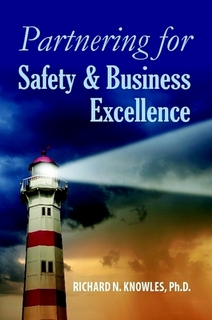
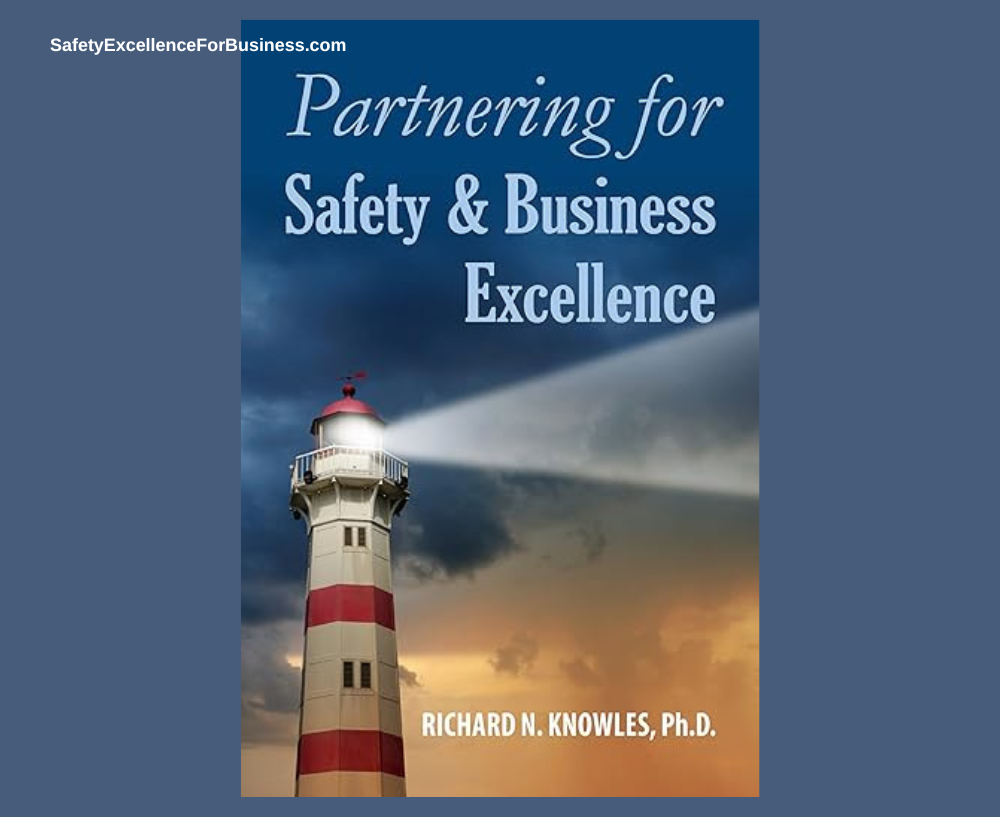
The Safety Leadership Process(TM) described in Partnering for Safety and Business Excellence,” helps leaders to lead their respective organizations beyond compliance, to safety excellence, with virtually zero injuries. Huge costs are saved as the waste of human suffering, injuries, and lawsuits and bad press are avoided.

You can order a copy of “Partnering for Safety and Business Excellence” on Amazon and learn more about the five simple steps to get you there!


Leading Safety Through Partnership and Respect

The Alcoa Transformation: A Lesson in Leadership

In October 1988, Paul O’Neill became Chairman of Alcoa, a global aluminum producer facing challenges in safety, quality, and profitability.

O’Neill recognized that true, sustainable improvement required a cultural shift – one built on open communication, respect, and recognition. He championed what I call Partner Centered Leadership, where every voice matters and information flows freely.

To enable this change, O’Neill asked all managers and supervisors to regularly ask their teams three simple questions:

  • Does everyone have all the information and resources needed to do their best?
  • Does everyone treat you with respect and consideration, every day, at every level
  • Does everyone receive recognition and honor for their contribution?

He also invited employees from all levels to contact him directly with suggestions for improvement. The results were remarkable: within a few years, Alcoa’s earnings increased fivefold, and both safety and market evaluation improved dramatically.

partnering for safety and business excellence

My Experience: Partner Centered Leadership in Action

When I served as Plant Manager at DuPont’s Belle, West Virginia facility, I independently adopted a similar approach. By engaging with employees daily – walking the plant, asking questions, and listening – I witnessed dramatic improvements:

Our injury rates dropped by about 97%,
emissions to the air, water and land dropped by 95%,
productivity rose by 40%, and
earnings went up 300% in just four years.

These results were not achieved by imposing top-down directives, but by building trust, sharing information, and working together. Over time, our culture shifted organically – people contributed more, leadership became easier, and our values for safety, quality, and respect became the foundation of our success.

Building a Positive Workplace This Holiday Season

As we enter the Christmas holiday season, let’s bring cheer and positivity into our workplaces. Treat each other with kindness and consideration, keep divisive politics out of the workplace, and focus on building a supportive environment. Remember, even in diverse settings like the International Space Station, shared values and mutual respect enable people to thrive together. We can do the same.

approach the new year for safety and partnership

Key Takeaways on Safety and Partnership

  • Open communication, respect, and recognition are the foundation of a strong safety culture.
  • Simple, consistent questions can drive meaningful change.
  • Sustainable improvement comes from partnership, not top-down mandates.
  • A positive workplace is built by everyone, every day.

Reflection on Safety

What’s one thing you can do this week to foster a safer, more respectful workplace? You don’t have to wait until the new year – you can start right now! Call me to learn more. Ask me questions!

Pressure Cooker: We Need to Partner with Each Other

Changes in our workplaces keep coming fast and furiously. A recent report released by Price-Waterhouse-Coopers indicates that by 2030 the pressure on workers to perform will be huge. Organizations will be using all sorts of ways to track performance…even putting chips under their workers skin to look at location, performance, health and wellness! They may be tracking safety performance as well. Managers will need to be having “mature conversations” with the people about all this change and the feeling of threat this creates for their people and their jobs. The pressure to keep improving skills and performance continues to increase.

There is a “workable pressure relief valve” already available to us to release these stress levels! It’s called Partnering for Safety and Business Excellence. The need for open, honest, disciplined, constructive dialog is critical. It is through these sorts of continuous conversations that people and organizations change. The positive energy for continuous improvement builds one conversation at a time over and over. Showing respect and caring for both the people’s mental and physical health, as well as for the success of the business, is critical. The business can’t succeed without the creativity and energy of the people and the people’s jobs can’t survive without excellent business performance.

Who Really Cares Enough to Step In and Hold those Critical Conversations?

A recent report by the Rand Corporation, Harvard Medical School and the University of California-Los Angeles, finds that 20% of the people in our workplaces feel that the work environment is “grueling, stressful and hostile.” Other reports I have read indicate that as many as 80% of the people in our workplaces are very dissatisfied with their managers and their lack of consideration, listening and caring. It is noted that about half of the workforce would leave their current job, if they could find another, expressly because of their “boss.”

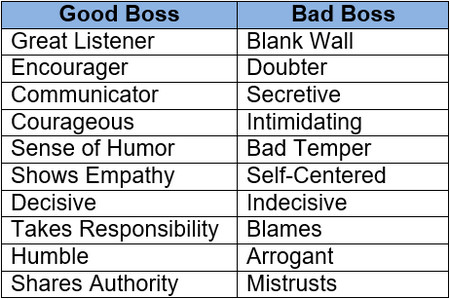
Thus the Forbes quote, “People leave managers, not companies.” Let’s face it. There are many managers and bosses that shouldn’t be managers and bosses. Many…cannot lead, are indecisive, don’t tell the truth, cannot hold the difficult conversations, aren’t clear in their expectations, have favorites, don’t follow-through, lack caring and concern.

There’s Fault…Everywhere:

It is not just the managers who are a problem. A story in the August 15th H.R. News indicates that people between 18 and 34 are putting themselves at risk by not following the companies’ safety procedures, even though over 50% say that they have read the procedures and understand why they exist. This leads, for example, to the tragic story of the death of a 29-year-old Athens, Georgia man on August 9th, who thoughtlessly jumped out of his forklift truck to catch a toppling, heavy, hydraulic car lift he was moving; it fell onto him.

On top of all this change, frustration and anger in our workplaces, many people are suffering from bullying from both managers and co-workers. Shouting and swearing are clearly inappropriate and so are actions like inappropriately withholding information, the unfair allocation of work, deliberate over-monitoring, spreading malicious rumors, and making unreasonable demands.

Stress, indifference and bullying are behaviors that block the ability to have the focused, disciplined, purposeful conversations required for both the people and their organizations to successfully negotiate all the changes we are and will be facing. The costs for the people and their organizations are huge resulting in the loss of as much as 30-40% of their effectiveness.

It doesn’t have to be this way!

Let’s all of us pull together and partner to build a successful and prosperous future. I challenge you to change your workplace for the better. Give me a call at 716-622-6467 and I’ll explain how you can do that quickly and effectively.