One of the unexpected pleasures of this season is knowing that my latest book endeavor (co-authored with Sebastian Wolf Siebzehnruebl) is soon to be on its way to a publisher.
I’m grateful for the opportunity to co-author this book about the process enneagram, not because it marks an ending, but because, at 91, it represents another step in a journey that has occupied much of my professional life and I enjoy lifelong learning.
For many years, my work has centered on a question that continues to challenge organizations everywhere: How do leaders solve problems that seem too complex, too interconnected, or too deeply rooted for conventional approaches to work?
That question led me to develop a practical framework for complex problem-solving – one designed to help leaders of organizations untangle issues that often resist traditional solutions. It is called the Process Enneagram. Time and again, I’ve seen leaders use this approach and facilitated framework to make progress on challenges that once felt overwhelming, producing results that are both meaningful and sustainable.
This new book brings together many of those years of learning, observation, and experience. My hope is that it will make these ideas more accessible to leaders and organizations seeking better ways to navigate complexity and address the “critical problems” that so often stand in the way of lasting success.
As the publication process unfolds, I’ll share more about the book and the ideas behind it. For now, I’m simply thankful for the opportunity to continue this conversation – and to contribute, in another way, to helping leaders solve the problems that matter most.
Some details on the book…
Sebastian Wolf Siebzehnruebl and I are co-authoring this new book, titled “Navigating Complexity: From Control to Flow Using the Process Enneagram.” We will be submitting the draft to Routledge Publishers in August.
Sebastian lives in Berlin, Germany and was the recent Curator of the International Federation of System Research which enabled him to know many of the leading thinkers in organizational development (OD) theory and ideas. When he became interested in the Process Enneagram, he realized that it provided a unique bridge between theory and practice.
The OD theory goes back in a continuous stream to Mary Parker Follett in about 1920. A large part of this theory, much of which has never been applied to practical situations, is supportive of and incorporated into the Process Enneagram helping us to understand how and why it works so well in helping organization to solve complex problems. The Process Enneagram is a very powerful, practical complexity tool.
My connection with the enneagram figure goes back to 1985, while I was a Plant Manager in the DuPont Company. My creation and unique development of the Process Enneagram occurred simultaneously with the development of chaos and complex adaptive systems theories, which I learned from Margaret Wheatley and others since 1996.
The Process Enneagram is very accessible to people in that it uses regular English; no technical language is used. I have used it successfully with people at all levels for over 30 years in many different kinds of organizations in many different countries, for solving complex problems.
(Note: The Process Enneagram is NOT the enneagram connected to or used in personality distinctions).
About the Process Enneagram
We see organizations as living systems with almost all the knowledge the people need to solve their problems is already there within. It is scattered among them, so when we open up the consequential conversations, they discover they know a lot and take the initiative to solve their own problems. They move from the top-down control of organizations treated as machines to the flow of self-organization systems in organizations treated as living system. Decisions are made by the people closest to the actual work.
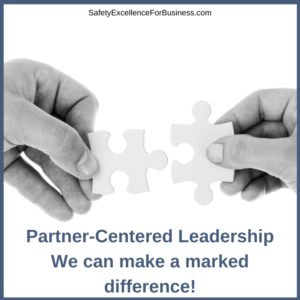
I call the approach I take with organizations “Partner Centered Leadership.” In using the Process Enneagram with organizations, to help them solve their problems, I have seen them make big changes, sometimes in even just one day. These problems can be in arenas like safety, quality, effectiveness, innovation, turf wars, etc.
In looking at performance in 6-month after-workshop reviews, we see injury rates, for example, dropped sharply after several workshops beginning the day after the workshop was held. The process has to be sustained by the leaders, of course, after the facilitated workshop ends, and that follow-up is easily taught.
The safety, as well as all other dimensions of performance, improve. They move from compliance to excellence in their performance. However, our focus is not just safety; it is the whole system. The people discover that everything gets better when they see their system and decide to change how they work together.
Final Thoughts
“Every so often, we’re given an opportunity to look back and see how years of work have quietly come together.”
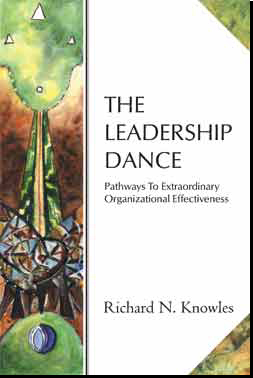
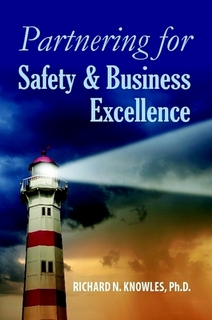
At 91, I’m overjoyed for this book development. Our new book will help you to learn more about this approach. My former book, “The Leadership Dance”, written in 2002, will also help you to understand this work. The Leadership Dance is available on Amazon.
It will be interesting to see how our book project develops as we move forward. I’m excited for this to happen! Please stay tuned. I’ll let you know when this new book is ultimately published.
 The pain and suffering is miserable.
 Changes are coming fast and furious. Everything seems to be changing all around us. This can cause unsettling feelings and a loss of control. However, in the middle of all this change, one area that can be steady for us is our relationships with each other.
 Artificial intelligence and robots, block chains and bitcoins, the opioid epidemic, political strife, and workplace violence, international worries and potential conflicts are some of the challenges facing all of us. There is a critical need for people, in all walks of life, to come together to openly and honestly talk about our challenges, share our thinking and learn together. We do not have to be blindly swept along. We can make decisions and do the things that we need to do to help to make the world a better place.
 When I talk about safety. my thinking goes well beyond the traditional safety numbers, training and procedures. It includes ideas about respect and how everyone has agreed to work together. It includes ideas about personal responsibility, integrity and dedication to helping everyone improve. It includes openness, honesty and sharing information abundantly. It includes ideas about the deeper, often hidden patterns of behavior which have a profound impact on the work environment and drive much of the behavior. It includes the fact that the managers and leaders have the largest impact on their organization’s performance. It includes the understanding that managers focus on reliability, stability, predictability and control as they try to maintain the status quo and that leaders focus on the people, change and the future sharing information abundantly, treating people with respect and helping people find meaning in their work. Both good leaders and managers are needed.
 Lots of critical knowledge, experience and skills will be lost. Younger people, who have grown up in an electronic world of texting and games, will replace these people. Many are out of shape and bordering on being over weight; some are developing diabetes. This will pose significant challenges to employers and the need to work safely and well.
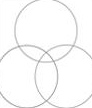 Overlap: All three of these areas of safety are often lumped together as SHE, EHS or HSE. When we lump these all together we can miss things so I think it is useful to see these three overlapping, interacting areas of our safety and health work. There is some overlap between Occupational Safety and Occupational Health like the proper selection and use of respirators. There is some area of overlap between Occupational Health and Process Safety like preventing chronic exposures to toxic chemicals. There is some overlap between Process Safety and Occupational Safety like locating trailers and offices away from operating areas using large quantities of flammable and explosive materials.