As we interact with a lot of people in different businesses, we continue to be amazed at the number of businesses that do not know about this problem or do not want to know about this problem.
 One director of a large organization of various businesses was completely unaware of the problem among their members. This is amazing since the statistics show that problems like bullying and sexual harassment are occurring in way over 50% of the organizations in our country. Apparently none of the businesses in this organization feel it is important to think about and discuss.
When business leaders turn their backs on this problem and try to avoid it, they are putting their people at unnecessary risk and costing their owners a lot of wasted money. This ignorance or indifference results in tolerating bad behavior like the lack of respect among all the people. With a culture of disrespect, bullying and harassment people avoid talking together about the important issues they are facing. No new ideas are generated. Learning stops. Frustration and violence build. This sort of indifference creates the culture where people are afraid and do as little as possible. Over time, a person who has suffered years of bullying or harassment can very easily become your home-grown active shooter. Management shares a lot of responsibility for this breakdown.
Understanding workplace violence prevention means leaders need to look at both the physical safety/security side and the psychological safety side of one’s business, organization and teams. Call us 716-622-6467 to learn more or send me an email.
 There seems to be an interesting disconnect here. OSHA does focus on falls, but what about roadway deaths and homicides? These are serious workplace problems as well. What about the whole problem of workplace violence that begins with the lack of respect (bullying, harassment), and that can lead to serious business problems like poor productivity, high absenteeism, fighting, injuries, murder, and suicide?
 The way in which we think about and work with all the people is a key shift that is needed.Leading thinkers like Eric Hollnagel, Tom McDaniel, Beth Lay, Carl Stent, and Ron Gantt are searching for better, more effective ways of engaging with everyone to build on the good things people are doing.
 A review of the Bureau of Labor Statics summary of fatal occupational injuries for 2011-2017 shows a 1% drop in fatalities from 2016 to 2017 to a total of 5,147 people having lost their lives at work. This is about 9% higher than the 4,693 people killed in 2011. The top three 2017 fatalities categories are roadway accidents totaling 1,299 (up 15% since 2011); slips, trips and falls totaling 887 (up 23% since 2011); and murders and suicides totaling 733 (up by only 2% since 2011).
 We need courageous leaders who focus on the people, change and the future. Leaders value sharing information, building trust and interdependence, and helping people to see how their job is important for the success of the whole venture.
 Go into your organizations listening to and talking with the people. Share your vision. Build trust and interdependence. Create safe spaces for people to talk with each other, to share and create the future. Everything will change. That is what I experienced at the Belle Plant.
 It is a new year. Businesses have compiled their 2018 safety statistics. They are looking at economics and at people. Who was hurt during this past year? What have we put in place so that those injuries won’t happen again? What are we talking about together for betterment? How did our systems contribute to our successes or to the injurie/s? What was the presence and the strength of Leadership support like around those people who were injured? Where are we most vulnerable safety-wise? How can we lead more effectively? How can we have an even safer workplace in this new year, 2019? How can we help employees to become more aware, more safety vigilant? And thus more able to return to their families at the end of the shift whole – with arms, legs, toes, fingers, eyes, ears – all intact. (Leaders, are you asking these questions?)
 In our November Safety Newsletter, I wrote about Partner-Centered Leadership. This is the most effective way to improve safety performance. This way of leading also results in improvements in most other aspects of the business as trust and interdependence are built and the environment is safe for the open flow of information. A key aspect of this is working with the people.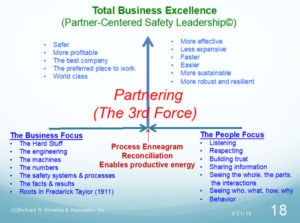
 The patterns at work are also changing as the business activities and demands are changing. There are not enough good, trained people to fill all the openings so the pressure on everyone is going up. Everything at work happens through people so it is critical that we keep everyone engaged in helping to achieve our successes. We need to open up the trust and build interdependence among everyone to keep the information flowing freely. It is clear how important genuine engagement is within our workplaces.
 They are totally unconscious that they are an important part of networks at work and at home. Many are the bread winners and if they get hurt or killed, they will cause their loved ones terrible hurt and trouble. The indifference of so many people in supervisory or management positions to this sort of behavior is terrible.
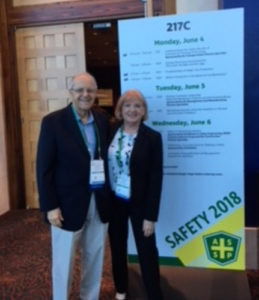 The rapid growth of active shooter incidents was one of the main areas of concern. The FBI and other experts gave talks about this, with their main focus on the active shooter incident itself. Most active shooter situations are conducted by men. Most of these occur in places of business. There is no typical profile for these people who come from all walks of life.
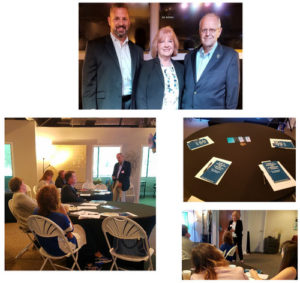
 The more people who are involved in thinking about, looking at and helping each other, the more likely that the organization’s safety performance will be outstanding. A key to having the people come together as partners in helping each other begins with respect. I think that most of us want to be treated respectfully and feel valued by each other; I know that I do. We all have jobs to do and our work quality and productivity need to be as good as we can do. We each need to be held to high standards and keep learning and growing in our knowledge and understanding. We can achieve this while treating each other respectfully, honestly sharing our knowledge and insights, asking for help when we need it, and giving a helping hand.
 We help to knock down the walls that have grown up between people and groups so that the arguments and fighting stop and they learn to value and help each other. We help to drill holes in the silos of production, HR, maintenance, and finance so that people can talk to each other to get the information they need to do their jobs. We help to remove the barriers that are restricting the up and down flow of critical information, improving its accuracy, so the organization can function more easily. We help to remove the barriers between the people writing rules and procedures (the work-as-imagined) and those doing the front-line work (the work-as-done). We help people to see that most of the injuries and incidents are the result of patterns and processes that need improvement and shift away from a culture of blame and criticism.
 Changes are coming fast and furious. President Trump is moving ahead on deregulations and removing barriers to improve our businesses, so we’ll probably see a lot of changes show up in our workplaces. Some will be positive and others will not. It is our responsibility to work together and make all these changes as good as possible.