The Three Biggest Safety Mistakes that Most Managers Make that Can Lead to Disaster and the Way Out.
The first Big Mistake is putting production first. Some managers are quite blunt and drive production without regard to the safety impact on the people. This sort of indifference is not common and these managers are fading away.
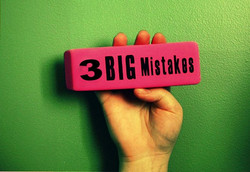 For most managers putting production first can be quite subtle with messages like:
- We have to get the product out and meet our schedules, but do it safely.
- We need to do it quicker and cheaper, but do it safely.
- We can’t miss a shipment.
- We’ll schedule maintenance when it is convenient.
- We’ve spent lots of money and time on training and equipment, now just get on with it and do it safely.
- The people cause injuries and incidents.
- There is lip service to safety, but it gets lost in the press for production.
The second Big Mistake is the normalization of drift. This can also be subtle since we want continuous improvement. We want changes that are carefully considered by co-workers, engineers and managers. These need to be documented as part of the Management of Change OSHA requirements.
But we do not want people making changes here and there with little consideration and no documentation. This can happen when a worker sees a better way to do his/her work and makes a little change. Then she/he sees another improvement and makes that change. Over time, many little changes accumulate to the point where deviance is accepted and the process suddenly goes out of control.
The third Big Mistake is having structural and cultural blocks to communications. Many organizations are structured in silos of specialization like engineering, maintenance, production, HR, accounting, shipping, etc., where people in one silo are not supposed to talk with people directly in another silo. They are supposed to communicate up through their line of management to the top of the silo and then that manager will pass the message down through his/her silo. Each time there is a step in the communication chain, information gets lost or changes or both.
Sometimes cultural practices block communications. Bullying, fear of criticism, messengers getting “shot”, etc. can also block the communications.
- People do not ask for your opinion.
- Management does not want bad news.
- The “boss” doesn’t listen.
- Mind your own business.
When communications are blocked, critical information is restricted and those who need to know it are unaware of what is happening and serious mistakes are made.
Here is the way out of this mess. All three of these Big Mistakes can be overcome.
- In opening up the communications in the organization where people can share and talk directly with those who need the information better decisions are made.
- When there is trust and interdependence, people listen to each other, critical information and decisions are openly discussed, and evaluated and much better decisions are made.
- When people see how they fit into the organization and the importance of their individual contributions, energy and creativity flows into their work.
 As managers go into their workplaces, walking around watching, listening and sharing with true authenticity and interest, trust and interdependence build. People learn to open up, to share, to point out possible areas for improvement, and to realize that they are a critical part of the whole safety effort. A huge, positive shift in the safety culture occurs. The people close to the actual, physical work are often in the best position to see potential hazards that are not visible to the managers. The managers often need to push to meet production schedules so it is easy for them to miss these potential hazards. Therefore, having the active help of those closest to the work is an important piece of the total safety effort. This is one way we avoid disasters like the Deepwater Horizon explosion and fire.
 Most of us working in safety have been brought up to see organizations as if they are machine-like. This thinking goes all the way back to Descartes (1596-1650) and Newton (1642-1727). We use reductionist approaches to try to understand them. We seek cause/effect relationships. We use linear processes for training and the like, prescribing answers and doing things TO the people. We work on this part or that part trying to fix the whole thing.
  Lots of critical knowledge, experience and skills will be lost. Younger people, who have grown up in an electronic world of texting and games, will replace these people. Many are out of shape and bordering on being over weight; some are developing diabetes. This will pose significant challenges to employers and the need to work safely and well.
 Most of the safety people I’ve come to know approach organizations as if they are mechanical things to manipulate. Organizations are structured in functions. Knowledge is structured in pieces. People are narrowly skilled. Motivation is based on external factors. Information is shared on a need to know basis. Change is a troubling problem. People work in prescribed roles seeing only their part of the work. If change is needed people are moved around like chairs. Training is provided in abundance. Safety programs are set up as step-by-step processes where things are arranged in a prescribed sequence.
  Overlap: All three of these areas of safety are often lumped together as SHE, EHS or HSE. When we lump these all together we can miss things so I think it is useful to see these three overlapping, interacting areas of our safety and health work. There is some overlap between Occupational Safety and Occupational Health like the proper selection and use of respirators. There is some area of overlap between Occupational Health and Process Safety like preventing chronic exposures to toxic chemicals. There is some overlap between Process Safety and Occupational Safety like locating trailers and offices away from operating areas using large quantities of flammable and explosive materials.