A very effective leading indicator relating to occupational safety is to see and keep track of how people are working, and paying attention to details. These are called Safe Acts Audits. We look at a significant number of people doing their day-to-day jobs and keep track of what we see over time.
The way people choose to do a job is very strongly influenced by what is happening in the working environment, the culture—which strongly impacts their thinking. All that is rushing around in their minds (work, family, home, sports, politics) at the point of making a decision and acting on it is really important. Feeling pressured, rushed, bullied, undervalued, disrespected, not listened to, being pushed around by their supervisor, etc. are systems problems that create cloudy thinking resulting in someone getting hurt.
When these poor behaviors, done by individuals, persist over time it is clear that they are tolerated by management; I refer to them as systems problems. We can try to address these each time they arise, but if they keep coming up and the system does not change, they are systems problems.
When we observe people working safely (this is most of the people) we praise their safety efforts, and when we see someone working unsafely we need to pay attention and work together to correct the systems problems that are negatively impacting them. The openness we advocate where it is okay to talk about these things, to challenge decisions, to ask for help, to stop a job if they feel it is unsafe, is called Partner-Centered Safety.
If the ratio of the number of people we observe working safely (most of the people) compared to those working unsafely (very few people) drops, that is we see relatively more people working unsafely, we know that something has changed and must be addressed immediately.
We call this ratio the Safe Acts Index. When the Safe Acts Audits are done 2-3 times a week we can stay close to the current climate and react quickly to a drop in the Index by raising awareness, increasing the number of safety conversations, by helping everyone to become aware of a change and to use extra alertness looking out for and helping each other. In our experience, when the Index drops an injury occurs within the next 2-3 days unless the level of awareness and concern is promptly raised.
 Safety excellence is achieved and sustained one day at a time, day after day.
In Partner-Centered Safety we can do this together. Give us a call — let’s talk about how you and your team can reap the safety benefits of this unique-and-clearly-successful, focused way to eliminate injuries and incidents in your workplace.
Next month, we’ll discuss the leading indicators for occupational health and process safety management.
 Yes, the elephant that got in the way of having the conversations that matter? You did? Oh, you have one of those too?
 Another paper from an award-winning company showed their outstanding progress in lowering their total recordable injury rate from around 10 to 0.5 through a steady progress of improvements over 10 years. Their work was out of the Newtonian/Cartesian perspective, quite similar to what Mathis and Galloway teach.
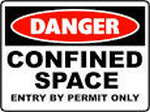 There is no doubt that work in the oil and gas industry is tough and dangerous, but that is no excuse for disregarding the health and safety of the workers. Almost all the deaths occurred when safety procedures were not followed. There is plenty of safety information available relating to tank cleaning. Have we not learned the lessons of improper confined space/vessel entry?
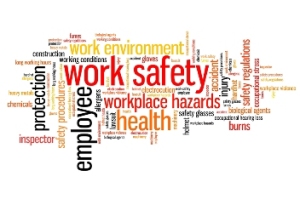 But, the machine view of organizations is the dominant paradigm right now. We direct the people to work in tight procedures. We manipulate them to do things right. We punish them when there is an injury or incidents. We look for root-cause. We think that if we can take things apart and understand the parts that we can understand the whole. Almost all the effort is engaged in doing things TO the people as if they were just interchangeable parts of a machine. Most people push back against authority in this paradigm. This is a win/lose environment.
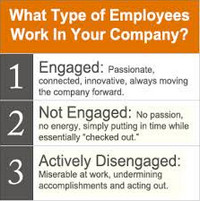 People are often reluctant to speak up in these negative environments. Ideas for improvement never surface. New employees are negatively influenced and led astray. Supervisors have a very rough time getting the people to do their work properly. Grievance rates are high and much time is wasted needlessly because these are not addressed at an early stage.
 For most managers putting production first can be quite subtle with messages like:
 Partner-Centered Safety is a robust, proven way to bring people together to achieve sustainable levels of safety excellence being based on deeply held beliefs and values.
 Things do not have to be this way! Most of the people know that this is counter-productive but that is the way it is. However, when we engage the people from across the organization in the Complexity Leadership Process, guiding them in a purposeful conversation of discovery that changes everything, they find it does not have to be that way!