It has been over 50 years since President Richard Nixon signed into law the Occupational Safety and Health (OSH) Act.
 We are all familiar with OSHA as both a regulator for Safety Standards and Compliance in the workplace and as an Educator (offering Information and Training across-the-board on the OSH standards). Indeed, if you’ve not looked lately, go to OSHA.gov and scroll through the various topics available for your learning.
Have you ever wondered what our workplaces might be like if OSHA had not been enacted? Would employers, on their own, protect the health and safety of their employees? If there was no law that employers “must” have PPE, or Lock & Tag, or Vessel Entry, or Machine Guards, or Eye Wash stations…would they? If there was no expectation of you, would you be your brother’s/sister’s keeper in the workplace?
You may make sport of these questions because, obviously, times have changed.
There is so much more awareness to safety, to life and limb, than in 1970 when OSHA came into fruition. And sometimes, the regulations seem like they go overboard in detail. Still, what we know deeply is that every one of the regulations was written in blood – meaning someone was killed or severely injured – and that prompted the writing of the regulation to avoid additional victims falling prey to similar work circumstances.
The standards underscore the safe way of doing things, to reduce the hazards and reduce the opportunities for being hurt, maimed, or killed. The OSHA mandated rules and procedures have had a big, positive impact in improving workplace safety. But these only get compliance in most organizations.
Today, even with the OSHA laws in place, about 5,300+ workers become victims of job-related fatalities every year. Why is that? Â Even with increasing numbers of Safety Professionals working within almost every facility, why is it that we keep killing so many people? Even with the oodles of hours of safety and health training that is conducted, why do these violations and tragedies continue?
We believe that a lot of the safety-related problems are systems problems. These are deeper than the things we can see on the surface like a specific incident or injury.
We need to dig in more deeply to find the things that are driving the surface problems. What is happening in the whole system and why? When we do this work, together, we can find things to fix that make a big, positive difference.
For example, we know that critical factors are the open flow of information for everyone, treating each other with respect and dignity and helping people to see how their work is important for the success of the whole organization. These ideas rarely show up in an incident report, yet from a systems point of view, these are huge.
We need commitments from across the organization
for improved safety.
It is all about everyone going home in one piece!
When we take a systems approach, we all get involved. The people and the company, together, working for improved safety results. Individual safety attitudes, fatigue, complacency, lack of taking responsibility, taking shortcuts and carelessness are addressed in the systems approach, and lead to fewer risks and serious injuries, even deaths.
Training must be meaningfully connected to the real work. Keeping track of injuries and incidents is also essential – why? These lagging indicators are one way to tell us if we are on the right track. But we do not use these to try to manage safety; we use leading indicators like the amount of time we spend in the field with the people, sharing information, listening, learning, solving problems and fixing them at an early stage; this is a powerful leading indicator.
We don’t want to return to the era where peoples lives or limbs accounted for little. Rather, that OSHA’s stated purpose for every company is fulfilled: “Each employer shall furnish a place of employment which is free/protected from recognized hazards that are causing or are likely to cause death or serious physical harm to their employees.”
I repeat my mantra:
“It is not okay for me to work and make my living
where it is okay for you to get hurt – physically or psychologically.
So, let’s figure it out together…how to profitably stay in business
and stay safe and secure all at the same time.”
What differentiates a good safety culture? Internalized, focused communications…up and down. It is the energetic daily conversations that are crucial for having a safe workplace and safe attitudes.
Because, through conversation you engage employees to think for themselves, in turn, focus (less auto-pilot) and ultimately, to develop a discipline where the employee thinks things through (daily), has the autonomy (choice) in addressing the perceived greatest risks, and overall, the daily conversation becomes the “muscle” – to active caring – building relationships. (And no one gets hurt!)
Plus, the more awareness of our surroundings we develop the better off we are from being surprised by workplace hazards, or from bullying emerging, or from being surprised by a perpetrator entering our workplace to do harm. Awareness matters in both the safety of doing our tasks and in the security of surveying our environment. Call me to learn more about the processes we use to heighten safety, security, effectiveness, performance. Culture matters.
With the Occupational Safety and Health Act of 1970, Congress created the Occupational Safety and Health Administration (OSHA) to ensure safe and healthful working conditions for workers by setting and enforcing standards and by providing training, outreach, education and assistance. Note: OSHA has now weighed in on Workplace Violence as any act or threat of physical violence, harassment, intimidation, or other threatening disruptive psychological behavior that occurs at the work site. It ranges from threats and verbal abuse to physical assaults and even homicide.
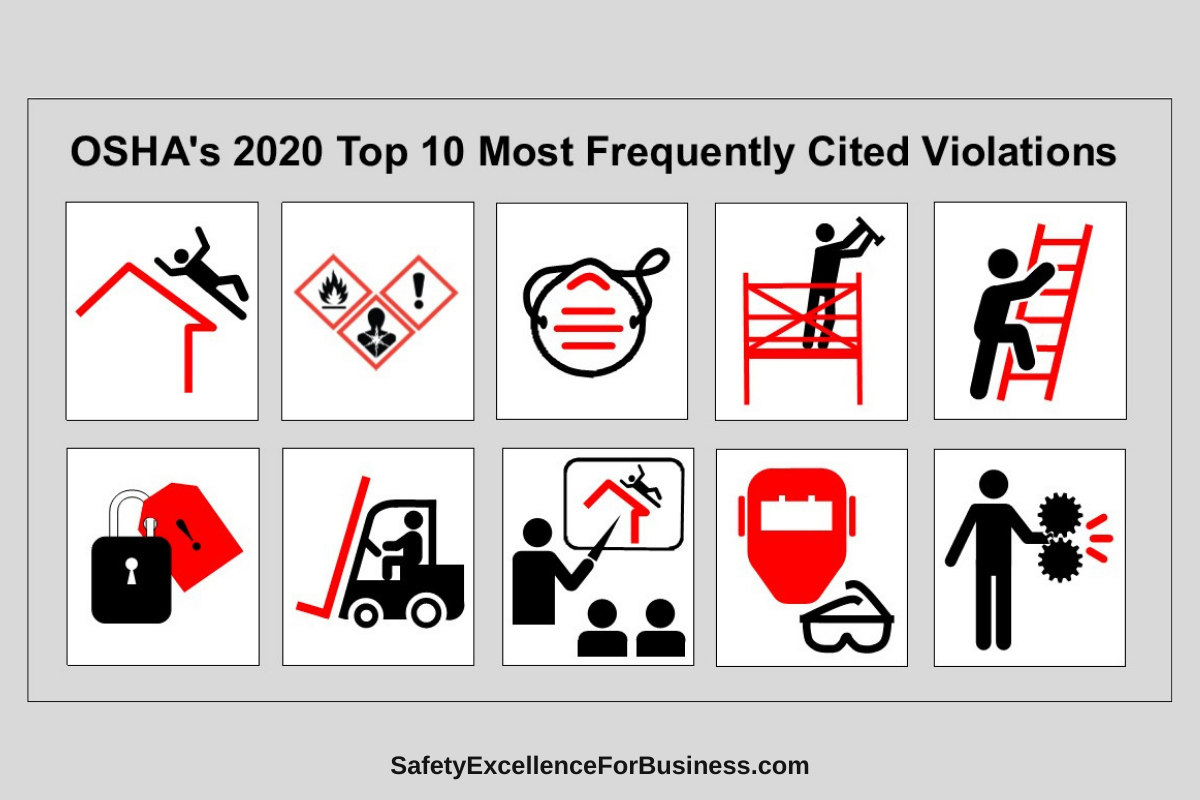
Top 10
- Fall Protection, construction
- Hazard Communication Standard, general industry
- Respiratory Protection, general industry
- Scaffolding, general requirements, construction
- Ladders, construction
- Control of Hazardous Energy (lockout/tagout), general industry
- Powered Industrial Trucks, general industry
- Fall Protection – Training Requirements
- Eye and Face Protection
- Machinery and Machine Guarding, general requirements
 Our knowledge, experience and education enable us to understand what is going on around us and helps us to determine if it is safe…if we are “clued in.” This is not a complicated idea, yet we see so many people who seem to be totally oblivious about what is going on around them.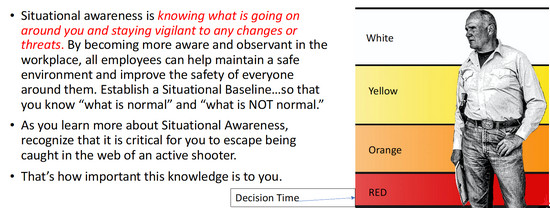
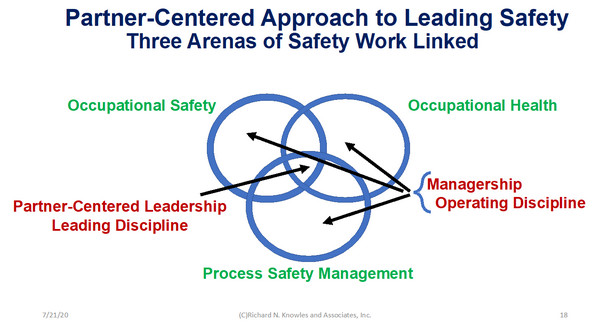
 Learning to work more effectively, through our safety work, spread to the whole organization. Each of you reading this newsletter can make a big difference as you engage with the people in your organizations, sharing information, building respect and trust. The impact of your work will spread.
 We each need to take the personal responsibility to try to avoid spreading the virus. With all the pressures, this is not easy. It is best if we each take personal responsibility to social distance and try to avoid spreading the virus. Government edicts really do not cover the details of what we each need to do very well. It is really up to us.
 In this story, a wicked witch puts the princess and the whole kingdom to sleep for 100 years. They all have to wait for the arrival of the prince to kiss the princess and awaken everyone. As children, we all knew this story, but in this new book, Stephen Capizzano shifts the story to thinking about what happens in our organizations.
 When we were able to shed our old habits at our Plant in West Virginia, injury rates dropped by 97%, emissions to air, ground and water as reported to the EPA dropped 95%, productivity rose by 45% and earnings rose by 300%. As I walked the plant for 5 hours each day we were reminding ourselves to shed the old habits and create a much brighter future.
 You can’t turn on the news or check your Internet homepage without sensing the depth of the issues that our country is experiencing. Whether it is returning to the workplace amidst COVID-19 rules, political protests, religious non-tolerance, or negative nightly news events – we’re experiencing a wide berth of dramatic events. And each of us has an opinion, a response, a way that we individually see these events and cope with this discord.
 It doesn’t have to be that way! Take a timeout!
 In times like this, when the business and production activities are ramping up, there is a real danger that safety problems will show up. Any time the level of activity changes, up or down, is a time of danger.
 It will not be easy as people are returning to the workplace. Leaders and managers must get out of their offices and purposefully engage with the people. They need to talk about the COVID-19 problem, share what is happening, and talk about the problems with which they are dealing. They need to do this with openness, honesty, respect, and caring. This is not just a one-off contact; leaders and managers need to engage in these conversations every day!