Leading in High-Consequence Industries – Red Flags are needed!

Every now and then a major disaster occurs in high-consequence industries like chemical manufacturing, petroleum production, refining, and aviation.

These disasters tend to be low-frequency events, which often look like some big surprise just happened. A lot of people get killed and severe damage to their facilities, their customers and the environments results. Often things looked like they were going fine just before the disaster strikes.

major disasters do occur in high-consequence industriesFor example, the workers on the Deepwater Horizon drilling platform received good recognition for outstanding occupational safety performance (the slips, trips and falls sorts of incidents) just a day or two before the explosion on April 20, 2010, that killed 11 people and injured 17 others. The pressures from top management to get into production led to failures of their process safety management (PSM) systems and processes. Communications were limited because management did not want to hear of more problems; they were driving the production schedule. The fine occupational safety performance masked the PSM deficiencies which are more subtle and invisible to upper managers, unless they are keenly aware of the needs for excellent PSM.
Part of being keenly aware is getting out of their offices and into the field looking, listening, talking with the people, and learning what is really going on. The gap between PSM-as-imagined and PSM-as-done was huge. When the pressures for production begin to overwhelm the safety systems, red flags need to be raised. The culture needs to be one where people can bring up problems and challenge the pressures without sacrificing their careers.

Another example occurred at the DuPont Belle, West Virgina plant (now Chemours) where I was the plant manager. I used the Partner-Centered Leadership (PCL) approach when I was there. I spent 5 hours a day in the plant looking, listening, talking with the people, and helping to build higher standards and performance. Along with all our other improvements, our occupational safety and ergonomics injury rates (Total Recordable Case Rate (TRC) dropped by over 97% to about 0.3 and emissions to air, water and land (a measure of our PSM performance) dropped by over 95%.

When I was transferred, the people close to the actual work continued to self-manage themselves with all we had learned about PCL, and their TRC stayed around 0.3 for 12 more years. However, the new managers that came after me used the traditional top-down approach and pulled lots of the PSM decision-making up to themselves. The TRC rates were so good that they left the people close to the work using PCL alone. The managers started to cut corners by limiting funds, cutting back on engineering support, letting inspection timelines slip, and the like. While the TRC looked great, the PSM was slowly rotting away and things fell apart.

They eventually had a series of disasters and an operator was killed. The managers hardly got out of their offices, lost contact with the people, let the standards slip and trust fell apart with the result that the gap between work-as-imagined and work-as-done became very wide. This sounds like the Deepwater Horizon pattern.

Safety in High-Consequence Industries

people need to continue to work safely to have a great safety cultureNow we have another example with the mess at Boeing and the 737 Max crashes. Top management was feeling the pressures for market share from Airbus and putting terrific pressures on cost reduction and faster production.

According to an April New York Times story, the people were forced to take short cuts, and about a dozen whistle-blower claims and safety complaints on things like defective manufacturing, quality problems, and debris left on planes were ignored. Training of pilots was shorted from 4 to 2 sessions in flight simulators. These problems went from the top of the organization all the way down. Now after two crashes 346 people are dead. There is a lot left in this story as it unfolds. Again, this pattern is like the first two stories.

In these high consequence industries, the top management needs to have a discipline of raising red flags when they are feeling the pressures to hurry up, cut costs and produce more. These pressures shutdown and destroy the communications, quality, and safety standards. This takes discipline and courage but that is the nature of the business. Leading businesses where there are high-consequence, low frequency events requires focus, skill and leading using the PLC approach.

When the system fails, it is not the top managers who get killed!

Wishfully Thinking that Violence Will Not Happen Here is No Longer Acceptable

As we interact with a lot of people in different businesses, we continue to be amazed at the number of businesses that do not know about this problem or do not want to know about this problem.

do not turn your back on violence at the workplaceOne director of a large organization of various businesses was completely unaware of the problem among their members. This is amazing since the statistics show that problems like bullying and sexual harassment are occurring in way over 50% of the organizations in our country. Apparently none of the businesses in this organization feel it is important to think about and discuss.
When business leaders turn their backs on this problem and try to avoid it, they are putting their people at unnecessary risk and costing their owners a lot of wasted money. This ignorance or indifference results in tolerating bad behavior like the lack of respect among all the people. With a culture of disrespect, bullying and harassment people avoid talking together about the important issues they are facing. No new ideas are generated. Learning stops. Frustration and violence build. This sort of indifference creates the culture where people are afraid and do as little as possible. Over time, a person who has suffered years of bullying or harassment can very easily become your home-grown active shooter. Management shares a lot of responsibility for this breakdown.

Understanding workplace violence prevention means leaders need to look at both the physical safety/security side and the psychological safety side of one’s business, organization and teams. Call us 716-622-6467 to learn more or send me an email.


Focus Where It Makes a Difference

OSHA recently published the list of the top 8 safety violations in 2018:

  • Fall Protection
  • Hazard Communication
  • Scaffolding, General Requirements
  • Control of Hazardous Energy (Lockout/Tagout)
  • Ladders
  • Fall Protection Training Requirements
  • Machinery and Machine Guarding
  • Eye and Face Protection

The Bureau of Labor Statistics lists the areas causing the most deaths in 2017:

  • Total Deaths: 5,147
  • Roadway: 1,299
  • Falls: 877
  • Homicides: 458

focus where it makes a difference in businessThere seems to be an interesting disconnect here. OSHA does focus on falls, but what about roadway deaths and homicides? These are serious workplace problems as well. What about the whole problem of workplace violence that begins with the lack of respect (bullying, harassment), and that can lead to serious business problems like poor productivity, high absenteeism, fighting, injuries, murder, and suicide?
Safety professionals and managers are spread quite thinly and need to prioritize their safety work. Certainly, the conditions of each workplace have their priorities, yet, these questions need to be considered:

  • What is our real experience? Our vulnerabilities?
  • Where can I have the greatest, positive impact?
  • Where do I best put my efforts?
  • What does OSHA want?
  • What does management want?
  • What do the people in our organizations want?

At Richard N. Knowles and Associates, we have found that the best place to focus is to build respect in our workplaces. While this may sound like an odd place to start, we have found that it positively impacts the performance of the entire organization. Safety gets a lot better. Productivity gets a lot better. All dimensions of our work get a lot better.

I know because this is what I did as a Plant Manager. Building a respectful workplace resulted in much better performance in all dimensions of our businesses because fewer people got distracted with bullying, more information was shared about the work and how we were doing, improvements in all aspects of what we were doing got made, new opportunities for better business performance showed up, the gap between work-as-imagined and work-as-done got smaller and total performance improved; this applied to all our work.

Each and every one of us can decide to treat each other with respect. We can share information about what is going on, listen and learn together. When this happens, everything gets better. We can agree about things. We can disagree about things. When we treat each other with respect, we can have honest, adult discussions about how to do things the best way we can. New ideas emerge, different ways to see things are learned, we think together to make our work the best it can be.

Safety gets better because the gap between work-as-imagined and work-as-done closes. We, together, come up with the best possible solutions to our challenges. All phases of our work get better.

When I was the Plant Manager in a large West Virginia chemical plant, working together with everyone with respect enabled us to cut injury rates by over 97%, cut emissions to the air, water and land by about 96% and earnings rose about 300%. All the things we looked at showed improvement.

Focusing on helping the workplace to become more respectful is a powerful place to work and the payoff is terrific. All you have to do is to decide to treat each other with respect, talk about the important challenges in all dimensions of our work, listen and learn together, then do what you have agreed to do with honesty and diligence.


A Step Forward

Every manager needs to go into their workplaces every day, talking with the people about the business and how it is doing, listening and learning together. They need to take a stand insisting on a respectful workplace and enforce it. Trust will build, people will open up and share what is happening and everyone can learn. The safety gets a lot better along with all the other aspects of the business.

Every manager that I have met has the capability to do this. It just takes the will to care enough. Call me…glad to share how this can happen in your workplace, too (716-622-6467).

Building a Civil, Respectful, Engaged, Safe, Profitable Place to Work

I think that most people want to work at a place that is like this. We spend a large part of our lives at work, so let’s make things really good.

together we can work together to have a safe workplaceThis is quite attainable with authentic, courageous leaders who take a stand that this is the sort of place they want to lead. The knowledge and technology are available and broadly known by lots of people so I want to share my own experiences.
Building a workplace like this results in the elimination of a lot of waste.

Some examples of the sources of waste are:

  • HR time spent investigating claims of harassment or bullying
  • High turnover
  • Low morale
  • Low engagement
  • Indifference by some people
  • Resistance to change
  • Graffiti and vandalism
  • Fighting
  • Sloppy workmanship
  • Many injuries and incidents
  • Poor housekeeping
  • Unnecessarily long times to get work done
  • Some OSHA investigations and law suits

In some organizations where there is a lot of bullying, harassment and worse, the level of waste could be as high as 20% of their payroll cost. This can all be avoided!!!

Here are the things I did that helped me a lot in tackling this problem when I was a plant manager:

  • I had to develop the focus within me that lack of respect and incivility were serious problems and I had to personally address them. If I was the problem, I had to work on that. I had to take a public stand on my beliefs that disrespect and incivility among us was unacceptable.
  • I then had to let everyone know that I would not tolerate anyone being treated with disrespect and incivility. I had to explain that:
    • none of us had a right to treat each other this way,
    • the open, free flow of information was vital for us to learn,
    • we needed to create a place where it was safe for people to talk together, share and learn,
    • it is very hard on the people impacting psychological safety,
    • it can lead to injuries and violence, and
    • it is very big, darn waste that we can eliminate if we work together. All of us need to play a part.
  • Then I had to go into all the workplaces in the plant, respectfully yet firmly, talking with everyone. Sometimes these conversations were not easy as some people pushed back and challenged me.
  • I did this day after day for months; trust and interdependence grew; slowly things changed. Everyone could see what I was doing and they knew that they could correct me if I made mistakes. Improvements in all dimensions of our work began to show up. Morale grew. There were fewer injuries and incidents. Turnover and absenteeism dropped. The environmental performance improved along with better customer service. Housekeeping improved. More work was getting done on schedule and costs were lower.

organizational leader's should look to the futureThis all began with my determination to work on improving respect, civility and safety. As I built credibility and trust with everyone, people began to make improvements in many other areas. Everything got better.

I need to emphasize that respect in the workplace is so very important. Lack of respect degrades everything. Lack of respect leads to harassment, bullying, sabotage, fighting, and even murder. The leaders set the tone and the standards. Bullying is a problem in over half of our workplaces and about half the bullying is from managers. This is just unacceptable. Not only does it demean the people, it causes safety problems and wrecks involvement and productivity.

Some managers have told me that they do not have the time for working this way. For me, working this way led to far better results than anything that I had learned in all the management courses I had been sent to over the years. As we at the plant came together, working with respect and civility, the level of engagement went way up. This led to more and more improvement. Injury rates dropped 98%, productivity rose 45% and earnings rose 300%. I found this to be a much more satisfying way to work.

  • It was easier for me.
  • It was fun to see the people grow.
  • The results were terrific!

Shifting to this way of working is quite do-able. It takes courage, concern, care, and commitment. Do you have the will? It is worth the effort!

I would be happy to talk with anyone about working this way and share experiences. Call me at 716-622-6467.

Engagement Matters

In this newsletter, I want to share some insights about the level of engagement of the people, the impact of low levels of engagement on profitability, safety performance, and workplace violence.

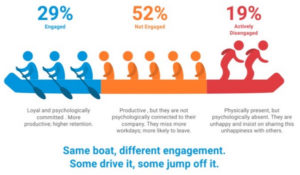
engage employees on profitability, safety performance, and workplace violenceIn 2017, Gallup, Inc. published their “State of the Global Workplace,” looking at the levels of productivity around the world. They were concerned about the decline in productivity and wanted to develop a better picture of the situation. High productivity is a key to having a good quality of life, and this relates to how involved people are in their work. They found that worldwide, only about 15% of the people are highly involved. This varies from country to country with the highest levels of involvement in the USA and Canada at 31%. Those businesses in the top quartile of employee involvement in their global study are 21% more profitable and 17% more productive. They also have 70% fewer safety incidents, 40% fewer quality incidents, 41% lower absenteeism, and 59% lower turnover. The positive impact of employees being highly involved is huge.
These benefits of high levels of involvement are impressive.

In my newsletters, I have written extensively about the importance of leadership in improving involvement. Leaders focus on building respect, sharing information and making it safe for people to talk together, to share ideas and to build their future together. Leaders focus on change and improvement. Leaders also focus on helping people to see how their work is important for the success of the whole organization; this helps people to develop meaning in their work and builds commitment.

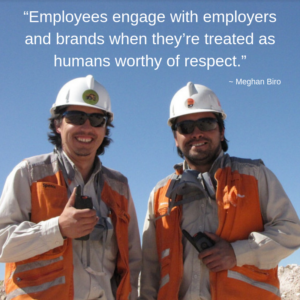
employees engage when treated with respectMost people in management positions focus on systems and processes like running a payroll or production line. They want reliability, predictability, control, and stability, which are important for much of the business. But when they apply this approach to people, things go downhill. This approach results in 71% of the people globally being unengaged and 19% being actively disengaged. Morale, safety and engagement are a mess. Managers engage in managership, and this will not solve the problem of building higher levels of engagement.
People in manager positions need to become stronger leaders. They need to spend several hours every day with the people around them, as well as those reporting to them. They need to go into their workplaces, talking respectfully with the people, sharing information, building trust and interdependence, listening and learning together. In doing this with quality, focused conversations, people open up, share ideas and come up with better ways to do their work. When I did this when I was a Plant Manager in a chemical plant with about 1,300 people and lots of hazardous chemicals and demanding jobs, our injury rate dropped by 98%, productivity rose by 45% and earning rose by 300%. The people were involved and committed because they wanted to be. I just set the conditions where this could happen.

I need to emphasize that respect in the workplace is so very important. Lack of respect degrades everything. Lack of respect leads to harassment, bullying, sabotage, fighting, and even murder. The leaders set the tone and the standards. Bullying is a problem in over half of our workplaces and about half the bullying is from managers. This is just unacceptable. Not only does it demean the people, it causes safety problems and wrecks involvement and productivity.

If the people at the top of our organizations really want to improve involvement, the treatment of people, safety and earnings, then they can do it. It is a matter of will. The knowledge and pathways are well known and proven.

engage employees on profitability, safety performance, and workplace violence

Breaking Through

I think that we, safety professionals, are on the verge of breaking through to our next major shift in building safer, more effective businesses. We can do both of these things at the same time.

breaking through to our next major shift in building safer, more effective businessesThe way in which we think about and work with all the people is a key shift that is needed.Leading thinkers like Eric Hollnagel, Tom McDaniel, Beth Lay, Carl Stent, and Ron Gantt are searching for better, more effective ways of engaging with everyone to build on the good things people are doing.

This is not about looking at things through rose-colored glasses but rather a hard-headed, practical, proven shift in how we all work together. Most people want to be treated with respect and be listened to. Most of the people I’ve met want to do a good job and be proud of their work – even the grumpy ones. They want to have the opportunity to have their ideas heard and considered. They want to have the opportunity to explore better ways to do their work. The people working close to the actual physical work know their jobs and often have good ideas about how to do the work to improve the efficiency, effectiveness, and safety of their jobs. It is highly frustrating for them when managers do not listen to them or care about what they are thinking and know. This frustration usually leads to all sorts of counter-productive behaviors that are both unsafe and costly.

What has been you own experience when treated this way? This is not just a problem for the front-line people. This sort of behavior happens at all levels of the organization and is hugely expensive. Frustrated people do not share constructive information together, decisions are avoided, learning is blocked, and opportunities for improvement are lost.

I think that safety professionals are in an ideal place to help their organizations break through to higher levels of performance. We are often called upon to work across many different parts of the organization to provide safety insights, investigations and consulting. We often have access to many people at different levels in our organizations. This gives us a lot of opportunities to engage respectfully with the people and open up the important conversations.

We can model the behavior of asking questions for understanding, of listening deeply, helping to understanding the situations and exploring ideas together. As we engage with the people with respect and consideration, trust builds. As trust builds, people are more willing to open up and discuss their ideas and concerns. Each positive conversation builds on the ones before it. In this process a space for open, honest conversations develops.

The breakthrough comes as more and more people are building on their successes, sharing ideas and insights, testing their thoughts with each other, and seeing what is possible. People find meaning in this way of working; they feel better about themselves and their jobs. More and more focus and clarity develop about how to do their work more safely and better. In addition to the good work you are doing with the safety systems and procedures, with your compliance and training efforts, you are bringing the people into the business. New ideas keep emerging and more good decisions are being made.

Engaging with the people this way takes courage, care, concern, and commitment. This is an ongoing way of working. Getting out of our offices and into the workplaces takes time and effort. When I learned to work this way, I discovered that my job got a lot easier. The gap between work-as-imagined and work-as-done almost disappeared. I found I was working on real challenges and getting out ahead of problems. All of us can engage with people this way. It is a matter of will; just do it!

Safety II – What it is…and Why we Need it!

In my last Safety newsletter, I wrote about the need to significantly improve our safety performance.

safety excellence in business leadershipI feel we are not moving fast enough to get to higher levels of performance. Way too many people are getting hurt and killed. Safety is a part of all we are doing and the whole system needs to be making improvements.
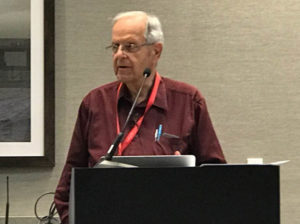
A big step was taken towards this goal in a Safety II in Practice Workshop in Saint Petersburg, Florida, on February 24-27, 2019. This excellent gathering was organized and brought together by Tom McDaniel, a widely experienced, practical safety leader. One speaker was Eric Hollnagel who has written several books about Safety II. He summarizes Safety II as “the ability to succeed under varying conditions, so that the number of intended and acceptable outcomes is as high as possible. The Safety II perspective looks at how work goes well and tries to understand how that happens in order to ensure that it will happen again.” The shift from Safety I, where we look at what went wrong, to Safety II where we look at what is going right and learn from it is critical for our work to attain higher levels of performance.

Tom McDaniel spoke of our obligation to present the closest interpretation of the truth in our organizations enabling the people to be given enough information to make the best possible decisions. We need to engage the people to help to improve our total performance including safety and reducing the number of incidents and injuries. We need to understand and build upon the things that people are doing right. He shared many practical examples to illustrate this.

Ron Gantt spoke about the need to widen our gaze to see the complex interactions of everyday work so we can see opportunities for improvement and facilitation rather only violations. He talked about the importance of going into our organizations, being with the people and seeing how they really do their work and the challenges they face every day as they get the jobs done. It is important to close the gap between work-as-imagined and work-as-done.

Our Safety I habits are strong and it is not easy to move into a Safety II approach and sustain it. Safety I and Safety II are not in opposition to each other. Rather we need to take the best of the basic rules, procedures and skills of Safety I, and build the positive approach of Safety II into our way of working with the people at all levels in the organization so that everyone can be the best they can be.

Richard N. Knowles speaking at the safety conferenceI was given the opportunity to talk about my work on Partner-Centered Leadership and shared information about the Process Enneagram, which is such a powerful tool to help people to come together to solve their complex problems. Partner-Centered Leadership is focused on sharing information, building trust and interdependence, helping everyone see the importance of their work for the success of the whole enterprise and moving into a better future. Everyone at the workshop was seeking ways to actually move into Safety II and make it happen so there was a lot of interest in this work.

Tom McDaniel was gracious in commenting:

Dick Knowles has the most effective process for understanding and measuring leadership and its advancement. His knowledge on this subject is outstanding. He brings clarity to what many are already doing in an ad hoc method but by seeing this relationship distinction, it can only help you and your organization move further along. I know he has written a couple of books on this. He has helped many organizations succeed.

This Workshop was an exciting step into a brighter future for the people in our organizations. Many thanks to Tom McDaniel for having organized this workshop and bringing everyone together to share and learn.

Our Progress is Too Slow for Safety!

Our safety progress here in the USA, in having fewer people getting hurt and killed at work, is way too slow.

Our Progress is Too Slow with SafetyA review of the Bureau of Labor Statics summary of fatal occupational injuries for 2011-2017 shows a 1% drop in fatalities from 2016 to 2017 to a total of 5,147 people having lost their lives at work. This is about 9% higher than the 4,693 people killed in 2011. The top three 2017 fatalities categories are roadway accidents totaling 1,299 (up 15% since 2011); slips, trips and falls totaling 887 (up 23% since 2011); and murders and suicides totaling 733 (up by only 2% since 2011).
Huge efforts by OSHA, The OSHA Voluntary Protection Program, ASSP, the Campbell Institute, the National Safety Council, NFPA, all their safety professionals and others seem to be stuck. A lot of significant effort like the ISO 45001 work is taking place. Big conferences are being held to share information, new ideas and all sorts of PPE, and other safety equipment. The ASSP conducts many safety professional certification programs in addition to all the various training programs and workshops. There is a lot of good information on the Internet to help as well. There is a lot going on! The amount of knowledge and expertise on safety is huge.

Why?

But why aren’t the improvements showing up in fewer people getting killed? Safety is about everyone going home to their families and loved ones healthy and injury-free.

I have a hunch!

Having worked as both a plant manager of big chemical plants for 13 years and consulting around the world for 23 years in all sorts of organizations, I have realized that so much of what we do in safety is managing the systems and processes and trying to keep things stable, focusing on reliability, predictability, stability, and control. This is good for the step-by-step, linear processes like running payroll, a production line, conducting a basic safety training session, or caring for the equipment and facilities and doing excellent PSM. Most supervisors and managers get promoted because they are doing a good management job. Every supervisory and management position has elements of managership that are very important and must be well done. But when we drive this sort of thinking relentlessly onto the people treating them like machines, things do not go well. This is where we are stuck in our safety work!

We need courageous leaders!

We need courageous leaders who focus on the people, change and the future. Leaders value sharing information, building trust and interdependence, and helping people to see how their job is important for the success of the whole venture.
Leaders see their organizations as if they are living systems; people are living systems so let’s treat them that way! Leaders go into their organizations on a daily basis modeling respect and openness, listening to and talking with the people about safety, the business and other important subjects. Leaders take a stand and ask the people to help them live up to it.

My safety stand was, “I do not have a right to make my living at a place where it is okay for you to get hurt. We also have to make profits so let’s get going and do both.” My stand on disrespect, harassment and bullying was that this was totally out of place. We need to treat each other with respect. I asked the all the people to hold me accountable to live up to these stands and they did.

When talking with the people, ask questions like these about their job:

  • How is your job going?
  • Do you know a better way to do it?
  • What are your two biggest safety hazards today and how are you going to manage these? (Employees need autonomy to be able to think things through!)
  • Do you have all the information you need?
  • Do you have the right tools and PPE for this work?
  • How can I help you?

In leading this way, I used tools for complex adaptive systems to help me develop clarity and co-create, with the people, the principles and standards of behavior like be respectful, listen, help each other, ask for help if needed, look after each other, apologize for mistakes, and tell the truth. We held ourselves and each other accountable to live up to these principles and standards.

Leading this way will help to shift us from Eric Hollnagel’s vision of Safety I to Safety II. In managing, we get stuck in Safety I and in leading, we break out and achieve Safety II.

Every supervisory and managerial position has a leadership component in their work. Supervisors have a larger managership component and higher level managers have a large leadership component. However, everyone with responsibility for people needs to balance and use both sets of skills.

When I was the Plant Manager of the DuPont Belle, WV plant, I led this way and the results the people achieved were amazing. Injury rates dropped by 98%, we went 16.5 million exposure hours between lost workday cases (8 ½ years), emissions dropped by 88%, productivity rose by 45%, and earnings rose by 300%.

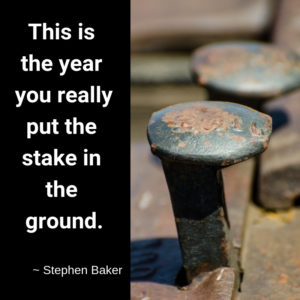
Leaders take a stand! Put your Stake in the Ground!

Go into your organizations listening to and talking with the people. Share your vision. Build trust and interdependence. Create safe spaces for people to talk with each other, to share and create the future. Everything will change. That is what I experienced at the Belle Plant.
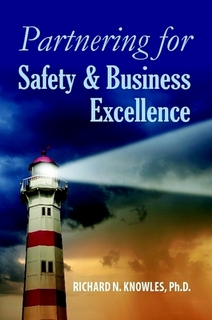
Safety happens when people take the responsibility to take all they know into themselves and do it! In leading this way energy and creativity are released, resistance to change almost disappears, and everyone can become the best they can be. A lot fewer people will get injured and killed and the business will make a lot more money. This is what is at stake…a Stake that requires Leadership.

All it takes is the courage and WILL to lead.

Richard N. Knowles and Associates are happy to talk with you about this so please give us a call at 7167-622-6467.

It is all about “YOU”

It is a new year. Businesses have compiled their 2018 safety statistics. They are looking at economics and at people. Who was hurt during this past year? What have we put in place so that those injuries won’t happen again? What are we talking about together for betterment? How did our systems contribute to our successes or to the injurie/s? What was the presence and the strength of Leadership support like around those people who were injured? Where are we most vulnerable safety-wise? How can we lead more effectively? How can we have an even safer workplace in this new year, 2019? How can we help employees to become more aware, more safety vigilant? And thus more able to return to their families at the end of the shift whole – with arms, legs, toes, fingers, eyes, ears – all intact. (Leaders, are you asking these questions?)

I don’t believe anyone wakes up in the morning and then upon entering the workplace plans on getting hurt that day. Nope. It doesn’t work that way. Rather, we go into work, we start our work, and our focus tends to wander from safety – inattentiveness – hurrying – trying to do two things at once – perhaps even emotionally upset at times. The result is that slips, falls, pinches, pinnings, caught between, run over, cuts, scrapes, and near-misses or worse scenarios come about. Somehow we drop the ball on being able integrate safety into the whole task from the initial safety reminders to the safety wrap-up at the end of the day. Even in-your-face safety signage doesn’t save the day.

It doesn’t have to be that way. Nope. Safety starts when YOU—the individual person takes a stand that YOU will work safe…all day. YOU will ask yourself where the biggest risks are and how you must prepare for them. YOU will watch out (as well), for your buddy and the newbie. YOU are an adult. YOU don’t want to have to wear a brace or a cast or bandage because of the pain and the inconvenience it’ll cause you. YOU don’t want to have to miss work or become a statistic. YOU will look out for booby-traps and surprises. YOU will be attentive to what is happening around you and with your specific task. YOU will be your own poster child for doing your work safely…because YOU want to…because it is the right thing to do, because YOU can think for yourself. YOU don’t need to have a safety prize for a reward, either. YOU decide to be safe…everyday, every moment, every task, constantly building on the good things you know and strengths you have. YOU make the decision!

Why am I beating this drum today for this newsletter? Because it is a clear aspect of Safety and Leadership. Until YOU can take a stand…a genuine stand…on YOUR own Safety, your head won’t be or stay in the game. And Leaders, Supervisors, Managers, CEO’s, you need to take your stand, too. Your stake has to be clearly and visibly in the ground. Your people need to know that you’ve taken your stance on safety and expect the same of them.

What does “taking a stand mean?” It means that not only will you publicly share that you recognize that YOU believe that working safely is important and something you must do, but you are, in addition, willing to ask all those you work with, to kindly hold you accountable to that stand. Will you do that? What’s your stand?

That’s the difference that makes the difference!

Employee Engagement…Really

engage with your employeesIn our November Safety Newsletter, I wrote about Partner-Centered Leadership. This is the most effective way to improve safety performance. This way of leading also results in improvements in most other aspects of the business as trust and interdependence are built and the environment is safe for the open flow of information. A key aspect of this is working with the people.

When I was the Plant Manager for a big chemical plant in West Virginia, we wanted to engage with the people as effectively as we could. We helped the people to form teams around their own work groups as well as being on site-wide teams to help improve other things. There were site-wide teams to address:

  • safety shoe quality, cost and fitting issues,
  • environmental improvement and reporting issues,
  • safety glasses purchasing and fitting issues,
  • addressing and correcting the roomer-mill chatter,
  • eliminating sexual harassment problems,
  • contractor safety improvement and coordination of safety training and
  • many other site-wide challenges.

As we moved to teams, we in management all realized that we had a lot to learn. For example:

  • Many people were very cautious and skeptical. How do we overcome this?
  • What did it mean to go to teams?
  • No one wanted to be seen as cozying up to management.
  • What extra work would be required?
  • Would there be a lot of extra training?
  • Would a person be required to come in during the day for a team meeting when they were scheduled for working at night?

In contemplating this shift in how we wanted to lead, it was clear that all of us had a lot to learn. For example:

  • Who would be the team leader?
  • How often should they meet?
  • How was the work to be shared?
  • Would the teams need a facilitator?
  • What is the best size for a team to be?
  • How do they keep track of their work?
  • Do we pay overtime for the meetings if they were conducted in an off-shift?
  • Do we pay for meals during the team meetings?
  • And on and on.

A really important resource for helping us was the Association for Quality and Participation (AQP) located in Cincinnati, Ohio. They helped us to set up a Chapter for our site and invited our teams to national meetings to see other teams from other companies and learn from them. All of us could see for ourselves that many companies were shifting to teams and that they were effective and fun. This was at the time of the big excitement about the quality movements in the early 1990’s.

These engagements with AQP were a big boost to us and really helped us to learn how to work in a team environment. Then the AQP was merged with the American Society for Quality (ASQ) and the whole team movement seemed to fade away.

But at our plant, we kept the teams moving, building on all we’d learned. We kept improving and learning together about what it meant to be really engaged with the people. Month after month the teams got stronger and more effective. The people in the teams became better leaders and the whole organization became leaderful, that is, when someone saw a need to improve something, they took the lead to get it done. The move to Partner-Centered Leadership became a real strength for us helping to eliminate injuries by 98%, reduce emissions by 88%, improve productivity by 45%, and increase earnings by 300%. The people sustained our safety performance at a Total Recordable Injury Rate of about 0.3 for 17 years.

The move away from AQP to ASQ was part of the broader shift to emphasizing costs, earnings, profits, and using big data to try to solve problems. Moving away from the people reduces the organization’s capacity for real, sustainable success. (Is this what has happened to GE?)

We kept key business indicators before us, but we did not lose sight of the people who make all this happen. When we brought the people side of the business together with the people side, things really improved.

partner centered safety leadership

Bringing the people and the business together is a powerful and effective way to release the energy and creative energies of the people to achieve terrific, sustainable results.