We are currently living in really tense social and political times.
 You can’t turn on the news or check your Internet homepage without sensing the depth of the issues that our country is experiencing. Whether it is returning to the workplace amidst COVID-19 rules, political protests, religious non-tolerance, or negative nightly news events – we’re experiencing a wide berth of dramatic events. And each of us has an opinion, a response, a way that we individually see these events and cope with this discord.
However we cope, we need to do our best to keep it out of the workplace, because when we allow the national scene to externally influence our internal emotions, then our emotions, in fact, can impact our safety and the well-being of others.
Whenever we are distracted by emotions, the risk of an injury or incident goes up, we become less able to concentrate and our minds get (emotionally) preoccupied. Our emotions can be influenced from a host of negatively-impacting ways; in turn, we can be hair-triggered to respond in negative ways. Today, we are especially challenged.
Below is a list of things that add to one’s emotional trigger points and what we can do when emotional overload pushes tempers to flare beyond the threshold level in our workplaces.
When tempers flare, adrenaline flows – it cranks up your heartbeat and breathing rate and primes your body for a fight response. This is NOT GOOD in our Workplaces! When tempers and emotions flare, regardless of the impetus, then the focus on safety takes a back seat. Emotion takes over. That is when you and your coworkers are exposed to higher risk and become most vulnerable to the unexpected.
So what just set you/him/her off?
- Someone hell-bent on bringing the national scene/election/politics into the workplace, and you vehemently disagree with their view? (Workplaces should be neutral places).
- Someone unable to keep their personal views on national, regional, or local events to themselves…to which you disagree?
- Someone unable to contain negative views about another’s race, gender, ethnicity, etc.? (Even when it is well known that what you think about a person/group of persons doesn’t matter when you come through the workplace door – if you’re going to collect a paycheck, you have to find ways to constructively work together with “all” people, regardless of your personal feelings. We’re all in this together, whether we like it or not.)
- Something else? Something that has become habitual? Like… bullying, intimidation, harassment or someone purposely pushing your buttons, again? And now they’ve crossed the line!
- You woke up angry and carried that into the workplace? Maybe you were stressed out before you came through the workplace door and you’ve taken it out on your mates.
- You’re tired? Maybe you’re tired of people taking shortcuts in the workplace and endangering others; maybe you hate that immature horseplay that may be happening, and that your supervisor seems powerless to address it.
- You’re an old-timer and could care less about the poor example you’re setting? (Don’t think people don’t see this.) Maybe you’re impulsive or maybe you just don’t give a darn. Maybe, because of the way you/he/she is behaving, that you/he/she has now not only lost the respect of coworkers, but the unexpected safety lapse is fully lurking around you; someone can get hurt…it is in the law of probabilities.
- Maybe you have just had a long, hot day and you are bone-weary?
Are you about to lose your temper (for whatever reason)? Cool it!
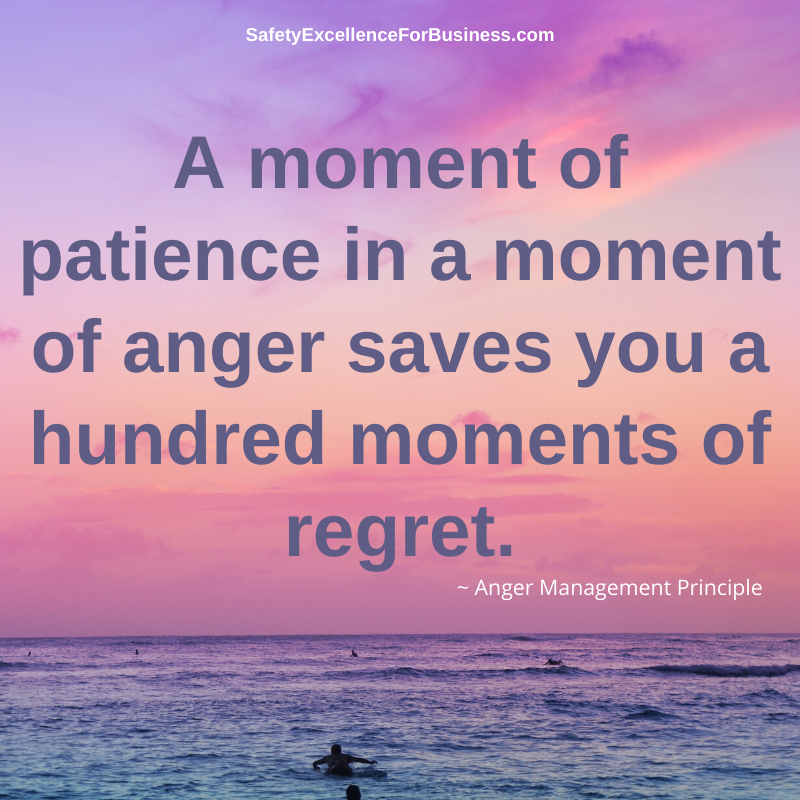 It doesn’t have to be that way! Take a timeout!
- Cool Off: Take a walk around the building or around the block.
- Take Two: Two minutes and think it through. Try to remove your emotion from this situation.
- Ask to have a private talk with your supervisor about your concerns: Make sure he/she fully grasps the situation and why what is emotionally happening is impacting safety and the workplace environment. Talk it through.
- Recognize that the actions of all of us have an influence on the safety-mindedness of other workers, particularly newcomers.
- If cornered, avoid responding to the aggressiveness of another: Don’t escalate the situation. (Walk away…it’s okay).
- Learn some work-group de-escalation processes, like our Stop-It Process – where one group code-word can quickly cool the ardor and bring harmony back.
Tame Your Temper: Because anger can be powerful, managing it is sometimes challenging. It takes plenty of self-awareness and self-control to manage angry feelings. It is hard, but you’ve got it in you!
Self-awareness is the ability to notice what you’re feeling, thinking, and why. Little kids aren’t very aware of what they feel – they just act it out in their behavior. That’s why you see them having tantrums when they’re mad. Adults (like workers in our workplaces) have the mental ability to be self-aware. If you’re still throwing tantrums, it is time you got some help or leave the workplace. When you get angry, take a moment to notice what you’re feeling and thinking.
Self-control is all about thinking before you act. It puts some precious seconds or minutes between feeling a strong emotion and taking an action you’ll regret.
Together, self-awareness and self-control allow you to have more choice about how to act when you’re feeling an intense emotion like anger.
The Safety Bottom Line: Our workplaces have to be as free as possible from the external emotional factors of the outside world. We’ve got enough to worry about internally – within our workplace walls.
Anytime tempers flare (as a result of any impetus – national, regional, political, or internal frictions) or when aggressive, bullying, intimidating behavior is not appropriately addressed, the risk of incidents increase. Hostile workplace and workplace violence potential increases, as does the potential liability for employers who have a duty to employees to provide a safe work environment, free of abuse and harassment.
Emotion-based discord is a health and safety issue. Supervisors need to be vigilant, “clued-in” and able to address such heated times with calm and genuine concern. Emotions can occur inside or outside the workplace and can range from simple disagreements that escalate to temper tantrum level, to threats and verbal abuse, to physical violence. (All no-no’s in the workplace!)
Thousands of people are exposed to workplace tensions each year…as well as the macro-level national concerns.
 In times like this, when the business and production activities are ramping up, there is a real danger that safety problems will show up. Any time the level of activity changes, up or down, is a time of danger.
 It will not be easy as people are returning to the workplace. Leaders and managers must get out of their offices and purposefully engage with the people. They need to talk about the COVID-19 problem, share what is happening, and talk about the problems with which they are dealing. They need to do this with openness, honesty, respect, and caring. This is not just a one-off contact; leaders and managers need to engage in these conversations every day!
 I have abstracted it here for those reading this newsletter since you may have missed it.
 In all cases, the healthcare provider and local health department should be consulted.
 This pandemic has created a lot of change and instability in our society. The FDA and the CDC have changed or suspended many rules and regulations in order to attack the pandemic and save lives. It is a period of high energy and creativity as people everywhere are coming up with ways to help people. Industries have shifted to making PPE-like face masks. The foodservice industry has shifted to take out and delivery. This creativity and positive energy is gratifying.
 Like all flus, we need to take it seriously and take appropriate steps to protect ourselves and our families. I have read a lot about what employers should do to protect their employees, which makes sense, but it sounds as if they are running a kindergarten class. OSHA has declared the flu as a recognized workplace hazard, so employers do have a responsibility to do what they can to protect the people, but there is a lot we can do for ourselves.
 The pain and suffering is miserable.
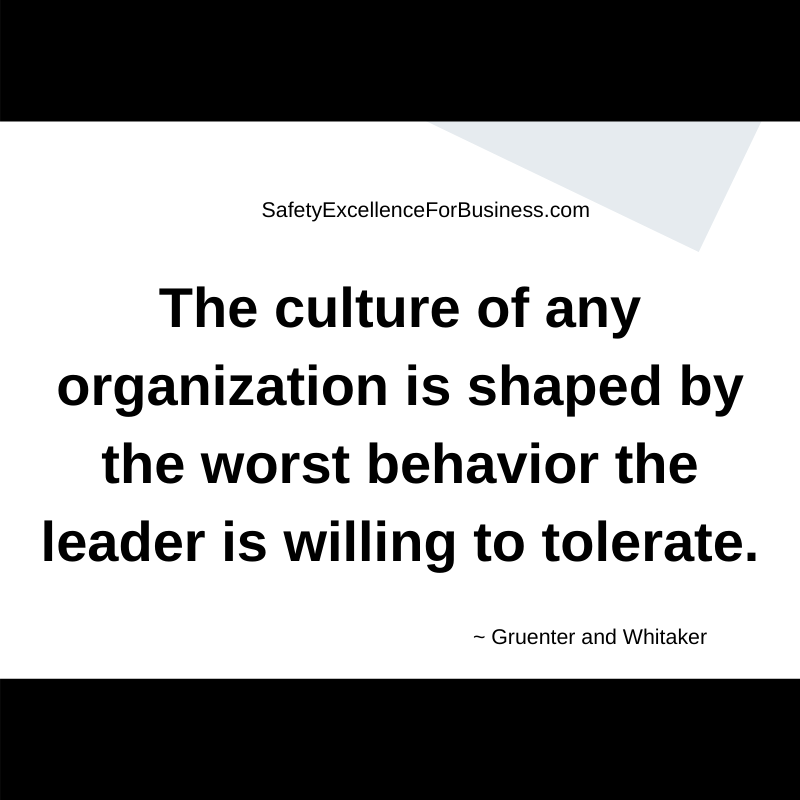 Changes are coming fast and furious. Everything seems to be changing all around us. This can cause unsettling feelings and a loss of control. However, in the middle of all this change, one area that can be steady for us is our relationships with each other.
 Artificial intelligence and robots, block chains and bitcoins, the opioid epidemic, political strife, and workplace violence, international worries and potential conflicts are some of the challenges facing all of us. There is a critical need for people, in all walks of life, to come together to openly and honestly talk about our challenges, share our thinking and learn together. We do not have to be blindly swept along. We can make decisions and do the things that we need to do to help to make the world a better place.
 When I talk about safety. my thinking goes well beyond the traditional safety numbers, training and procedures. It includes ideas about respect and how everyone has agreed to work together. It includes ideas about personal responsibility, integrity and dedication to helping everyone improve. It includes openness, honesty and sharing information abundantly. It includes ideas about the deeper, often hidden patterns of behavior which have a profound impact on the work environment and drive much of the behavior. It includes the fact that the managers and leaders have the largest impact on their organization’s performance. It includes the understanding that managers focus on reliability, stability, predictability and control as they try to maintain the status quo and that leaders focus on the people, change and the future sharing information abundantly, treating people with respect and helping people find meaning in their work. Both good leaders and managers are needed.
 This begins with the leaders deciding to create a culture where it is okay and encouraged that people genuinely talk together, listen, help each other, look out for each other and learn together. This is a culture that helps people to be the best they can be and for the organization to get a lot more profitable. It all begins with all of us treating each other with respect.
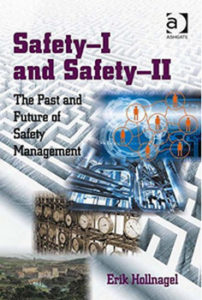 This is the sort of culture that Eric Hollnagel is talking about in his Safety II work, which is intended to move the organization beyond the traditional top-down safety management. (I’ve written about Safety II in previous articles – it is all good!)